
Present Continuous Tense अंग्रेजी व्याकरण का एक आधारभूत हिस्सा है। यह हमें उन कार्यों के बारे में बताता है जो बोलते समय या वर्तमान काल में हो रहे होते हैं। प्रभावी अंग्रेजी सीखने के लिए present continuous tense sentence in hindi को समझना अत्यंत आवश्यक है। यह टेंस हमें यह जानने में मदद करता है कि कोई क्रिया किस क्षण घटित हो रही है। इस लेख में हम इस टेंस की सहायक क्रिया, वाक्य संरचना, और क्रिया का चौथा रूप (V4) के उपयोग को विस्तार से जानेंगे। यह ज्ञान आपके दैनिक वार्तालाप और लेखन कौशल को सुधारने के लिए महत्वपूर्ण है।
Present Continuous Tense क्या है और इसका उपयोग कैसे करें
Present Continuous Tense, जिसे Present Progressive Tense भी कहा जाता है, उन क्रियाओं को दर्शाता है जो वर्तमान में जारी हैं। इसका सबसे आम उपयोग उन कार्यों के लिए होता है जो ठीक उसी समय हो रहे हैं जब उनके बारे में बात की जा रही है।
यह टेंस केवल वर्तमान में हो रही क्रियाओं तक ही सीमित नहीं है। इसका उपयोग उन अस्थायी क्रियाओं को बताने के लिए भी किया जाता है जो इस समय चल रही हैं, भले ही वे ठीक बोलते समय न हो रही हों। उदाहरण के लिए, “मैं आजकल एक उपन्यास पढ़ रहा हूँ।”
इसके अतिरिक्त, इस टेंस का उपयोग भविष्य की पूर्व-निश्चित योजनाओं या व्यवस्थाओं को व्यक्त करने के लिए भी किया जाता है। इसलिए, सही और स्पष्ट संवाद के लिए इसके विभिन्न उपयोगों को समझना महत्वपूर्ण है।
Present Continuous Tense की पहचान और मूलभूत नियम
हिंदी वाक्यों में Present Continuous Tense की पहचान करना सरल है। इन वाक्यों के अंत में अक्सर ‘रहा है’, ‘रही है’, ‘रहे हैं’, ‘रहा हूँ’ जैसे शब्द आते हैं।
इस टेंस को बनाने के लिए तीन मुख्य सहायक क्रियाओं (Helping Verbs) का उपयोग होता है। ये हैं is, am, और are। मुख्य क्रिया (Main Verb) के साथ हमेशा -ing जोड़ा जाता है।
कर्ता (Subject) के अनुसार सहायक क्रिया का प्रयोग होता है। I के साथ ‘am’, He/She/It या एकवचन संज्ञा (Singular Noun) के साथ ‘is’, और You/We/They या बहुवचन संज्ञा (Plural Noun) के साथ ‘are’ का प्रयोग होता है।
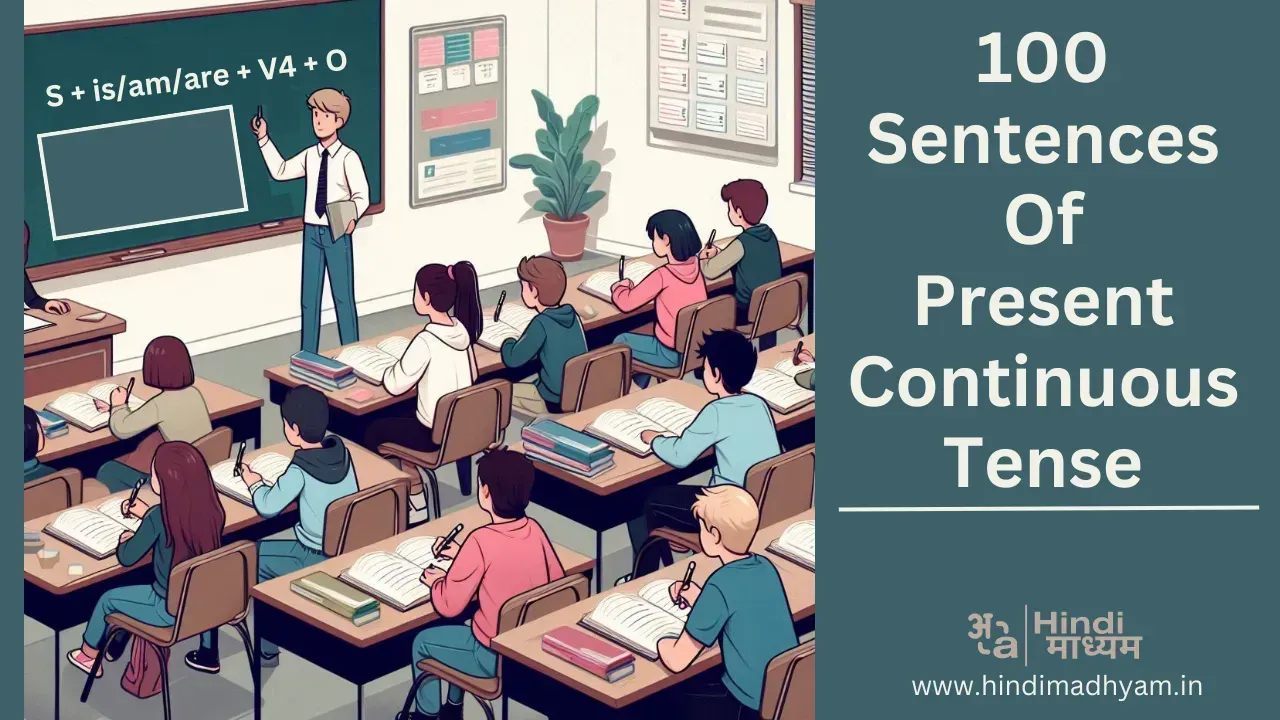 Hindi expert explaining Present Continuous Tense structure and rules to a group of Indian students
Affirmative Sentences: संरचना और 50 विस्तृत उदाहरण
Affirmative Sentences (सकारात्मक वाक्य) सबसे सरल वाक्य संरचना का पालन करते हैं। ये सीधे तौर पर बताते हैं कि कोई कार्य हो रहा है।
इसकी मूल संरचना निम्नलिखित है: कर्ता (S) + is/am/are + क्रिया का चौथा रूप (V4, i.e., V + ing) + कर्म/अन्य (O)
इस संरचना का पालन करते हुए हम विभिन्न परिस्थितियों में वाक्यों का निर्माण कर सकते हैं।
1. वर्तमान में हो रही क्रियाएं (Actions Happening Now)
यह सबसे सामान्य उपयोग है जहां क्रिया ठीक बोलते समय हो रही होती है।
- I am writing a detailed report for my manager.
(मैं अपने प्रबंधक के लिए एक विस्तृत रिपोर्ट लिख रहा हूँ।) - She is drinking hot coffee because it is cold outside.
(वह गर्म कॉफ़ी पी रही है क्योंकि बाहर ठंड है।) - The children are playing silently in the garden.
(बच्चे बगीचे में चुपचाप खेल रहे हैं।) - He is fixing the broken chair with a hammer.
(वह हथौड़े से टूटी हुई कुर्सी ठीक कर रहा है।) - We are waiting patiently for the train to arrive.
(हम ट्रेन के आने का धैर्यपूर्वक इंतजार कर रहे हैं।) - My mother is calling me from the kitchen.
(मेरी माँ मुझे रसोई से बुला रही हैं।) - The dog is barking loudly at the strangers.
(कुत्ता अजनबियों पर जोर से भौंक रहा है।) - You are reading an interesting novel by a new author.
(आप एक नए लेखक का रोचक उपन्यास पढ़ रहे हैं।) - The engineer is repairing the electrical fault immediately.
(इंजीनियर तुरंत बिजली की खराबी की मरम्मत कर रहा है।) - The birds are chirping sweetly on the tall branch.
(पक्षी ऊँची डाल पर मधुरता से चहचहा रहे हैं।)
2. अस्थायी क्रियाएं (Temporary Actions)
ये क्रियाएं इस क्षण नहीं हो रही हैं, लेकिन वर्तमान काल के दौरान जारी हैं।
- I am learning Spanish this semester at the institute.
(मैं इस सेमेस्टर में संस्थान में स्पेनिश सीख रहा हूँ।) - He is staying with his uncle until he finds a new apartment.
(वह नया अपार्टमेंट मिलने तक अपने चाचा के साथ रह रहा है।) - They are working on a new project for the next two months.
(वे अगले दो महीनों के लिए एक नए प्रोजेक्ट पर काम कर रहे हैं।) - She is training hard for the upcoming marathon.
(वह आने वाली मैराथन के लिए कड़ी मेहनत से प्रशिक्षण ले रही है।) - We are decorating the house for the Diwali festival.
(हम दिवाली त्योहार के लिए घर सजा रहे हैं।) - My brother is studying abroad for his Master’s degree.
(मेरा भाई अपनी मास्टर डिग्री के लिए विदेश में पढ़ाई कर रहा है।) - The company is developing new software technologies.
(कंपनी नई सॉफ्टवेयर तकनीकों का विकास कर रही है।) - The river is constantly flowing towards the bay.
(नदी लगातार खाड़ी की ओर बह रही है।) - I am spending a lot of time reviewing old documents this week.
(मैं इस सप्ताह पुराने दस्तावेज़ों की समीक्षा करने में बहुत समय बिता रहा हूँ।) - The temperature is increasing rapidly due to climate change.
(जलवायु परिवर्तन के कारण तापमान तेजी से बढ़ रहा है।)
3. भविष्य की निश्चित योजनाएं (Fixed Future Plans)
Present Continuous Tense का उपयोग निश्चित भविष्य की व्यवस्थाओं के लिए किया जाता है।
- I am meeting the CEO tomorrow morning at 9 AM.
(मैं कल सुबह 9 बजे सीईओ से मिल रहा हूँ।) - They are travelling to Jaipur next weekend by flight.
(वे अगले सप्ताहांत उड़ान से जयपुर की यात्रा कर रहे हैं।) - We are launching the new product next month.
(हम अगले महीने नए उत्पाद को लॉन्च कर रहे हैं।) - She is celebrating her birthday party at the resort on Friday.
(वह शुक्रवार को रिसॉर्ट में अपनी जन्मदिन की पार्टी मना रही है।) - The team is starting the final rehearsal this evening.
(टीम आज शाम अंतिम पूर्वाभ्यास शुरू कर रही है।) - He is having surgery next week at the main city hospital.
(अगले सप्ताह उसका मुख्य शहर के अस्पताल में ऑपरेशन हो रहा है।) - We are moving to a new house in December.
(हम दिसंबर में एक नए घर में जा रहे हैं।) - My father is retiring from the service next year.
(मेरे पिताजी अगले साल सेवा से सेवानिवृत्त हो रहे हैं।) - The school is organizing a science exhibition soon.
(स्कूल जल्द ही एक विज्ञान प्रदर्शनी आयोजित कर रहा है।) - They are completing their project deadline on time.
(वे समय पर अपनी परियोजना की समय सीमा पूरी कर रहे हैं।)
4. लगातार हो रहे बदलाव (Continuously Changing Situations)
यह टेंस किसी वस्तु या स्थिति में चल रहे परिवर्तन को भी दिखाता है।
- The economy is growing slowly after the recession.
(मंदी के बाद अर्थव्यवस्था धीरे-धीरे बढ़ रही है।) - My English speaking ability is improving significantly every day.
(मेरी अंग्रेजी बोलने की क्षमता हर दिन काफी सुधर रही है।) - The prices of essential commodities are rising continuously.
(आवश्यक वस्तुओं की कीमतें लगातार बढ़ रही हैं।) - The world is becoming smaller due to rapid technological advances.
(तेजी से तकनीकी प्रगति के कारण दुनिया छोटी होती जा रही है।) - His health condition is getting better with the new treatment.
(नए उपचार से उनकी स्वास्थ्य स्थिति बेहतर हो रही है।) - The ozone layer is depleting steadily over the polar regions.
(ध्रुवीय क्षेत्रों पर ओजोन परत लगातार कम होती जा रही है।) - Children are using smartphones more frequently than ever before.
(बच्चे पहले से कहीं अधिक बार स्मार्टफोन का उपयोग कर रहे हैं।) - The government is implementing new policies for rural development.
(सरकार ग्रामीण विकास के लिए नई नीतियां लागू कर रही है।) - The political climate is changing rapidly across the nation.
(देश भर में राजनीतिक माहौल तेज़ी से बदल रहा है।) - The days are getting shorter as winter approaches quickly.
(सर्दी आने के कारण दिन छोटे होते जा रहे हैं।)
5. लगातार हो रही कष्टप्रद क्रियाएं (Annoying Repetitive Actions)
‘Always’, ‘constantly’ या ‘forever’ के साथ प्रयोग होने पर यह झुंझलाहट या आलोचना व्यक्त करता है।
- He is always complaining about the quality of the food.
(वह हमेशा भोजन की गुणवत्ता के बारे में शिकायत करता रहता है।) - She is constantly interrupting me when I am trying to speak.
(जब मैं बोलने की कोशिश करता हूँ तो वह लगातार मुझे टोकती रहती है।) - They are forever arguing over small, unnecessary matters.
(वे हमेशा छोटे, अनावश्यक मामलों पर बहस करते रहते हैं।) - My neighbor is always making a noise late at night.
(मेरा पड़ोसी हमेशा देर रात शोर मचाता रहता है।) - The child is constantly asking difficult and complicated questions.
(बच्चा लगातार कठिन और जटिल प्रश्न पूछता रहता है।) - You are always leaving the door open when you go out.
(जब तुम बाहर जाते हो तो तुम हमेशा दरवाजा खुला छोड़ देते हो।) - The machine is constantly breaking down due to overuse.
(अधिक उपयोग के कारण मशीन लगातार खराब हो रही है।) - My colleague is always borrowing my pen and never returning it.
(मेरा सहकर्मी हमेशा मेरा पेन उधार लेता रहता है और कभी वापस नहीं करता।) - He is constantly forgetting important dates and anniversaries.
(वह लगातार महत्वपूर्ण तिथियों और वर्षगांठों को भूलता रहता है।) - The manager is always changing the meeting schedule unexpectedly.
(प्रबंधक हमेशा अप्रत्याशित रूप से बैठक का समय बदलता रहता है।)
Negative Sentences: संरचना और 50 उदाहरण
Negative Sentences (नकारात्मक वाक्य) में क्रिया के जारी न होने को बताया जाता है। इनमें सहायक क्रिया के तुरंत बाद ‘not’ का प्रयोग होता है।
इसकी मूल संरचना है: कर्ता (S) + is/am/are + Not + क्रिया का चौथा रूप (V4) + कर्म/अन्य (O)
यह सुनिश्चित करता है कि वाक्य की नकारता स्पष्ट रूप से व्यक्त हो।
1. वर्तमान में क्रिया का अभाव
- I am not attending the party tonight because I feel unwell.
(मैं आज रात पार्टी में नहीं जा रहा हूँ क्योंकि मैं अस्वस्थ महसूस कर रहा हूँ।) - She is not doing her assignment right now; she is resting.
(वह अभी अपना असाइनमेंट नहीं कर रही है; वह आराम कर रही है।) - They are not listening to the radio; they are watching a movie.
(वे रेडियो नहीं सुन रहे हैं; वे एक फिल्म देख रहे हैं।) - The gardener is not watering the plants; it is raining heavily.
(माली पौधों को पानी नहीं दे रहा है; भारी बारिश हो रही है।) - We are not using the old equipment anymore for safety reasons.
(हम सुरक्षा कारणों से अब पुराने उपकरणों का उपयोग नहीं कर रहे हैं।) - He is not working in the office today; he took a holiday.
(वह आज कार्यालय में काम नहीं कर रहा है; उसने छुट्टी ली है।) - The students are not making noise in the classroom today.
(विद्यार्थी आज कक्षा में शोर नहीं मचा रहे हैं।) - You are not wearing your jacket despite the cold weather.
(ठंड के मौसम के बावजूद आप अपना जैकेट नहीं पहन रहे हैं।) - The mechanic is not fixing the engine yet; he is waiting for parts.
(मैकेनिक अभी इंजन ठीक नहीं कर रहा है; वह पुर्जों का इंतज़ार कर रहा है।) - I am not driving the car fast on this narrow road.
(मैं इस संकरी सड़क पर कार तेज़ नहीं चला रहा हूँ।)
2. अस्थायी या नियोजित क्रियाओं का निरस्तीकरण
- I am not going abroad for my further studies next year.
(मैं अगले साल अपनी आगे की पढ़ाई के लिए विदेश नहीं जा रहा हूँ।) - She is not participating in the annual sports competition.
(वह वार्षिक खेल प्रतियोगिता में भाग नहीं ले रही है।) - We are not relocating to Chennai next month as planned.
(हम योजना के अनुसार अगले महीने चेन्नई स्थानांतरित नहीं हो रहे हैं।) - The doctor is not seeing any patients this afternoon.
(डॉक्टर आज दोपहर किसी मरीज को नहीं देख रहे हैं।) - They are not purchasing the new property due to high costs.
(वे उच्च लागत के कारण नई संपत्ति नहीं खरीद रहे हैं।) - He is not teaching the advanced grammar class this term.
(वह इस सत्र में उन्नत व्याकरण की कक्षा नहीं पढ़ा रहा है।) - My colleagues are not supporting the new management system.
(मेरे सहकर्मी नई प्रबंधन प्रणाली का समर्थन नहीं कर रहे हैं।) - The train is not running on time because of dense fog.
(घने कोहरे के कारण ट्रेन समय पर नहीं चल रही है।) - She is not eating meat anymore; she has become a vegetarian.
(वह अब मांस नहीं खा रही है; वह शाकाहारी बन गई है।) - I am not using social media platforms much these days.
(मैं आजकल सोशल मीडिया प्लेटफॉर्म का ज़्यादा उपयोग नहीं कर रहा हूँ।)
3. अन्य नकारात्मक उदाहरण
- The artist is not painting the portrait in bright colors.
(कलाकार चमकीले रंगों में वह चित्र नहीं बना रहा है।) - The government is not reducing the taxes on fuel currently.
(सरकार वर्तमान में ईंधन पर कर कम नहीं कर रही है।) - My phone is not charging properly tonight for some reason.
(किसी कारणवश मेरा फ़ोन आज रात ठीक से चार्ज नहीं हो रहा है।) - We are not discussing the financial budget yet in the meeting.
(हम बैठक में अभी तक वित्तीय बजट पर चर्चा नहीं कर रहे हैं।) - The baby is not crying loudly; she is just making small sounds.
(बच्चा ज़ोर से नहीं रो रहा है; वह सिर्फ़ हल्की आवाज़ें निकाल रही है।) - He is not taking any risks with his career choices now.
(वह अब अपने करियर विकल्पों के साथ कोई जोखिम नहीं ले रहा है।) - She is not wearing her spectacles to watch television.
(वह टेलीविज़न देखने के लिए अपना चश्मा नहीं पहन रही है।) - The police are not investigating the case actively right now.
(पुलिस अभी मामले की सक्रिय रूप से जांच नहीं कर रही है।) - I am not believing a word of what they are saying in the news.
(वे जो खबर में कह रहे हैं, मैं उस पर एक शब्द भी विश्वास नहीं कर रहा हूँ।) - They are not delivering the parcels on Sundays.
(वे रविवार को पार्सल वितरित नहीं कर रहे हैं।)
Interrogative Sentences (Yes/No Type): संरचना और 50 उदाहरण
Interrogative Sentences (प्रश्नवाचक वाक्य) में प्रश्न पूछा जाता है। Yes/No प्रकार के प्रश्न वे होते हैं जिनका उत्तर हाँ या ना में दिया जा सकता है।
इसकी मूल संरचना है: Is/Am/Are + कर्ता (S) + क्रिया का चौथा रूप (V4) + कर्म/अन्य (O)?
प्रश्न हमेशा सहायक क्रिया से शुरू होता है।
1. वर्तमान क्रिया से जुड़े प्रश्न
- Is she feeling better after taking the medicine dose?
(क्या दवा लेने के बाद वह बेहतर महसूस कर रही है?) - Are you preparing dinner for the guests right now?
(क्या आप अभी मेहमानों के लिए रात का खाना तैयार कर रहे हैं?) - Is the sun shining brightly through the clouds today?
(क्या आज सूरज बादलों से होते हुए तेज चमक रहा है?) - Am I holding the map in the correct direction?
(क्या मैं नक्शा सही दिशा में पकड़े हुए हूँ?) - Are they packing their luggage for the sudden trip?
(क्या वे अचानक यात्रा के लिए अपना सामान पैक कर रहे हैं?) - Is the teacher explaining the difficult concept clearly?
(क्या शिक्षक कठिन अवधारणा को स्पष्ट रूप से समझा रहे हैं?) - Are we leaving the house early to catch the morning flight?
(क्या हम सुबह की उड़ान पकड़ने के लिए जल्दी घर से निकल रहे हैं?) - Is your father watching the latest news updates on TV?
(क्या आपके पिताजी टीवी पर नवीनतम समाचार अपडेट देख रहे हैं?) - Am I speaking too softly for you to hear me clearly?
(क्या मैं इतना धीमा बोल रहा हूँ कि आप मुझे ठीक से नहीं सुन पा रहे हैं?) - Are the neighbors renovating their apartment currently?
(क्या पड़ोसी वर्तमान में अपने अपार्टमेंट का नवीनीकरण कर रहे हैं?)
2. अस्थायी स्थिति और योजना से जुड़े प्रश्न
- Is he dating someone new these days?
(क्या वह आजकल किसी नए व्यक्ति को डेट कर रहा है?) - Are they looking for a job change in a different city?
(क्या वे किसी दूसरे शहर में नौकरी में बदलाव की तलाश कर रहे हैं?) - Is the manager conducting all the interviews this week?
(क्या प्रबंधक इस सप्ताह सभी साक्षात्कार आयोजित कर रहा है?) - Are we traveling by road or by air next month for the vacation?
(क्या हम अगले महीने छुट्टियों के लिए सड़क मार्ग से या हवाई मार्ग से यात्रा कर रहे हैं?) - Is the company offering a higher salary package to new recruits?
(क्या कंपनी नए कर्मचारियों को उच्च वेतन पैकेज दे रही है?) - Am I overthinking this whole complex situation?
(क्या मैं इस पूरी जटिल स्थिति के बारे में ज़्यादा सोच रहा हूँ?) - Is the construction work finishing before the monsoon season starts?
(क्या मानसून शुरू होने से पहले निर्माण कार्य समाप्त हो रहा है?) - Are your parents celebrating their anniversary this week?
(क्या आपके माता-पिता इस सप्ताह अपनी सालगिरह मना रहे हैं?) - Is the cost of living increasing significantly in metropolitan cities?
(क्या महानगरों में रहने की लागत काफी बढ़ रही है?) - Is the whole team participating in the upcoming charity event?
(क्या पूरी टीम आगामी धर्मार्थ कार्यक्रम में भाग ले रही है?)
Wh-Question Sentences: संरचना और 50 उदाहरण
Wh-Question Sentences (डबल प्रश्नवाचक वाक्य) जानकारी मांगने के लिए उपयोग किए जाते हैं। इनमें Wh-शब्द (जैसे what, where, why, when, who, how) वाक्य के आरंभ में आते हैं।
इसकी मूल संरचना है: Q.W + is/am/are + कर्ता (S) + क्रिया का चौथा रूप (V4) + कर्म/अन्य (O)?
यह संरचना विशिष्ट जानकारी प्राप्त करने में सहायक होती है।
1. Wh-शब्दों का उपयोग (What, Where, Why)
- What are you planning to do for your upcoming holiday?
(आप अपनी आने वाली छुट्टी के लिए क्या करने की योजना बना रहे हैं?) - Where is he hiding the important documents right now?
(वह अभी महत्वपूर्ण दस्तावेज़ कहाँ छिपा रहा है?) - Why are they arguing loudly in the middle of the street?
(वे सड़क के बीचों-बीच जोर से बहस क्यों कर रहे हैं?) - What is the journalist reporting about the current political crisis?
(पत्रकार वर्तमान राजनीतिक संकट के बारे में क्या रिपोर्ट कर रहा है?) - Where are we going for the team lunch this afternoon?
(हम आज दोपहर टीम लंच के लिए कहाँ जा रहे हैं?) - Why is she wearing formal clothes to the casual gathering?
(वह अनौपचारिक सभा में औपचारिक कपड़े क्यों पहन रही है?) - What are the children drawing on the large whiteboard?
(बच्चे बड़े व्हाइटबोर्ड पर क्या बना रहे हैं?) - Where are the construction workers digging the deep foundation?
(निर्माण मजदूर गहरी नींव कहाँ खोद रहे हैं?) - Why am I feeling so tired and exhausted all day long?
(मैं पूरे दिन इतना थका हुआ और क्लांत क्यों महसूस कर रहा हूँ?) - What is the professor discussing in the advanced seminar class?
(प्रोफेसर उन्नत सेमिनार कक्षा में किस बारे में चर्चा कर रहे हैं?)
2. Who और How का उपयोग
- Who is managing the social media accounts for the entire brand?
(पूरे ब्रांड के लिए सोशल मीडिया अकाउंट कौन प्रबंधित कर रहा है?) - How are you coping with the heavy workload this month?
(आप इस महीने के भारी कार्यभार का सामना कैसे कर रहे हैं?) - Who is delivering the keynote speech at the conference today?
(आज सम्मेलन में मुख्य भाषण कौन दे रहा है?) - How is the new security system protecting the building premises?
(नई सुरक्षा प्रणाली भवन परिसर की सुरक्षा कैसे कर रही है?) - Who is arranging the flowers and decorations for the grand wedding?
(भव्य शादी के लिए फूल और सजावट कौन व्यवस्थित कर रहा है?) - How am I supposed to solve this extremely complex puzzle?
(मुझे इस अत्यधिक जटिल पहेली को कैसे हल करना चाहिए?) - Who is baking the huge cake for the anniversary celebration?
(सालगिरह समारोह के लिए विशाल केक कौन बेक कर रहा है?) - How are the scientists tracking the movement of the migratory birds?
(वैज्ञानिक प्रवासी पक्षियों की गतिविधियों को कैसे ट्रैक कर रहे हैं?) - Who is sponsoring the entire budget for the cultural event?
(सांस्कृतिक कार्यक्रम के लिए पूरा बजट कौन प्रायोजित कर रहा है?) - How is the company dealing with the sudden financial loss?
(कंपनी अचानक हुए वित्तीय नुकसान से कैसे निपट रही है?)
Negative Interrogative Sentences: संरचना और 50 उदाहरण
Negative Interrogative Sentences (नकारात्मक प्रश्नवाचक वाक्य) प्रश्न पूछते हैं और उनमें नकारात्मकता भी होती है। इनका उपयोग आश्चर्य, संदेह या अपेक्षा व्यक्त करने के लिए किया जाता है।
Yes/No प्रकार के लिए संरचना: Is/Am/Are + S + Not + V4 + O? (या Is/Aren’t/Ain’t + S + V4 + O?)
Wh-Question प्रकार के लिए संरचना: Q.W + is/am/are + S + Not + V4 + O?
ध्यान दें कि संक्षिप्त रूपों का उपयोग बोलचाल में अधिक होता है, जैसे ‘Is he not…’ की जगह ‘Isn’t he…’.
1. Yes/No नकारात्मक प्रश्न
- Is he not coming to the office party tonight?
(क्या वह आज रात ऑफिस पार्टी में नहीं आ रहा है?) - Are you not telling the complete truth to the authorities?
(क्या आप अधिकारियों को पूरी सच्चाई नहीं बता रहे हैं?) - Am I not explaining the rules clearly enough for everyone?
(क्या मैं सभी के लिए नियमों को पर्याप्त स्पष्ट रूप से नहीं समझा रहा हूँ?) - Are they not watching the important football match on television?
(क्या वे टेलीविजन पर महत्वपूर्ण फुटबॉल मैच नहीं देख रहे हैं?) - Is the new machine not performing efficiently in the factory?
(क्या नई मशीन कारखाने में कुशलतापूर्वक काम नहीं कर रही है?) - Are we not meeting the strict deadline set by the client?
(क्या हम ग्राहक द्वारा निर्धारित सख्त समय सीमा को पूरा नहीं कर रहे हैं?) - Is the baby not sleeping peacefully in the new cradle?
(क्या बच्चा नए पालने में शांति से नहीं सो रहा है?) - Am I not handling the delicate glassware carefully enough?
(क्या मैं नाजुक कांच के बर्तनों को पर्याप्त सावधानी से नहीं संभाल रहा हूँ?) - Are the employees not following the new safety protocols strictly?
(क्या कर्मचारी नए सुरक्षा प्रोटोकॉल का सख्ती से पालन नहीं कर रहे हैं?) - Is the government not addressing the critical environmental issues?
(क्या सरकार गंभीर पर्यावरणीय मुद्दों पर ध्यान नहीं दे रही है?)
2. Wh-Question नकारात्मक प्रश्न
- Why are you not answering my urgent phone calls?
(आप मेरे ज़रूरी फ़ोन कॉल का जवाब क्यों नहीं दे रहे हैं?) - What are they not doing correctly in the laboratory experiment?
(वे प्रयोगशाला प्रयोग में क्या सही नहीं कर रहे हैं?) - Why is she not wearing her seatbelt while driving the car?
(वह कार चलाते समय अपनी सीटबेल्ट क्यों नहीं पहन रही है?) - How are you not understanding this simple instruction?
(आप इस सरल निर्देश को कैसे नहीं समझ रहे हैं?) - Why are we not taking necessary precautions against the heavy rain?
(हम भारी बारिश के खिलाफ आवश्यक सावधानी क्यों नहीं बरत रहे हैं?) - What is he not accepting about the recent changes in the policy?
(वह नीति में हाल के बदलावों के बारे में क्या स्वीकार नहीं कर रहा है?) - Why is the media not covering the local news extensively?
(मीडिया स्थानीय समाचारों को व्यापक रूप से क्यों कवर नहीं कर रहा है?) - How am I not helping you resolve this complicated matter?
(मैं इस जटिल मामले को सुलझाने में आपकी मदद कैसे नहीं कर रहा हूँ?) - Where are the children not playing today due to the weather condition?
(मौसम की स्थिति के कारण बच्चे आज कहाँ नहीं खेल रहे हैं?) - Why are the students not submitting their project report on time?
(विद्यार्थी अपनी प्रोजेक्ट रिपोर्ट समय पर क्यों जमा नहीं कर रहे हैं?)
Present Continuous Tense का दैनिक जीवन में उपयोग
Present Continuous Tense का उपयोग केवल ग्रामर की किताबों तक ही सीमित नहीं है। यह रोज़मर्रा के संवाद में सबसे अधिक इस्तेमाल होने वाले टेंस में से एक है। Present Continuous Tense का सही ज्ञान अंग्रेजी को और अधिक गतिशील बनाता है।
भारत में, जहाँ लोग अक्सर हिंदी और अंग्रेजी के बीच स्विच करते हैं, इस टेंस का उपयोग वर्तमान क्रियाओं को सटीक रूप से व्यक्त करने में मदद करता है। यह तुरंत कार्रवाई, अस्थायी स्थितियों और यहां तक कि भविष्य की व्यवस्थाओं को भी दर्शाता है।
उदाहरण के लिए, जब आप किसी को फोन करते हैं तो यह पूछना आम है: “What are you doing?” (आप क्या कर रहे हैं?)। इसका उत्तर भी इसी टेंस में दिया जाता है: “I am working on my computer.” (मैं अपने कंप्यूटर पर काम कर रहा हूँ।)
यह टेंस हमें समय के साथ हो रहे क्रमिक बदलावों को भी व्यक्त करने की सुविधा देता है। जैसे कि किसी का स्वास्थ्य सुधर रहा हो या बच्चे बड़े हो रहे हों।
व्यावहारिक संदर्भ में, अस्थायी स्थितियों के लिए इस टेंस का उपयोग समझना महत्वपूर्ण है। यदि कोई कहता है, “I am living in Delhi for six months,” (मैं छह महीने के लिए दिल्ली में रह रहा हूँ), तो इसका अर्थ है कि यह एक अस्थायी निवास है, स्थायी नहीं।
Advanced Usage: P.C.T. के अपवाद और विशेष प्रयोग
Present Continuous Tense के नियम सरल हैं, लेकिन कुछ क्रियाएं ऐसी होती हैं जिनका प्रयोग सामान्य तौर पर इस टेंस में नहीं किया जाता। इन्हें Stative Verbs (स्थिति क्रियाएं) कहा जाता है।
Stative Verbs मुख्य रूप से भावनाओं, विचारों, धारणाओं या स्वामित्व को व्यक्त करती हैं। जैसे कि ‘know’, ‘believe’, ‘want’, ‘like’, ‘love’, ‘seem’, ‘own’, ‘smell’, और ‘taste’।
हम सामान्यतः यह नहीं कहते: “I am knowing the answer.” (मैं उत्तर जान रहा हूँ।) इसके बजाय, हम Simple Present Tense का उपयोग करते हैं: “I know the answer.” (मैं उत्तर जानता हूँ।)
हालाँकि, कुछ Stative Verbs का उपयोग उनके अर्थ बदलने पर Present Continuous Tense में हो सकता है। उदाहरण के लिए, क्रिया ‘have’ (पास होना) को Continuous में उपयोग नहीं किया जाता। लेकिन ‘have’ जब ‘experience’ (अनुभव करना) के अर्थ में प्रयोग हो, तो यह संभव है।
उदाहरण: “She is having a terrible time at the conference.” (वह सम्मेलन में एक भयानक समय बिता रही है।) यहाँ ‘having’ का अर्थ ‘अनुभव कर रही है’ से है।
इसी तरह, क्रिया ‘think’ जब ‘विचार करना’ के बजाय ‘राय देना’ के अर्थ में आती है, तो यह Continuous हो सकती है। “I am thinking about buying a new car next week.” (मैं अगले सप्ताह एक नई कार खरीदने के बारे में विचार कर रहा हूँ।)
इन बारीक अपवादों को समझना व्याकरण की गहराई को मजबूत करता है।
निष्कर्ष
Present Continuous Tense अंग्रेजी भाषा की नींव है। इसका सही उपयोग वर्तमान में जारी क्रियाओं, अस्थायी स्थितियों और भविष्य की निश्चित योजनाओं को स्पष्ट रूप से व्यक्त करने में मदद करता है। इस लेख में दिए गए विस्तृत उदाहरण और नियम present continuous tense sentence in hindi की आपकी समझ को सुदृढ़ करेंगे। अभ्यास के माध्यम से, आप इस टेंस में महारत हासिल कर सकते हैं, जिससे आपका संवाद अधिक स्वाभाविक और त्रुटिरहित बन जाएगा।
Last Updated on 10/11/2025 by Emma Collins

Hello there! I’m Emma Collins, your English instructor at Skilled English. Learning a new language doesn’t have to be stressful or confusing — and I’m here to prove it. With over 6 years of experience teaching English to beginners, my goal is to help you feel confident in speaking, writing, and understanding English step by step. Read more


