
अंग्रेजी व्याकरण में Tense (काल) को समझना एक महत्वपूर्ण कदम है। खासकर उन हिंदी भाषी शिक्षार्थियों के लिए जो अंग्रेजी में अपनी बात कहना चाहते हैं। future tense examples in hindi to english का ज्ञान संवाद को सटीक और प्रभावी बनाता है। भविष्य काल, या Future Tense, हमें उन क्रियाओं के बारे में बताता है जो आने वाले समय में होंगी। इस काल को सीखने से आप अपनी भविष्य की योजनाओं, वादों और उम्मीदों को स्पष्ट रूप से व्यक्त कर सकते हैं। यह लेख आपको भविष्य काल के चारों मुख्य भेदों की वाक्य संरचना (Sentence Structure), उनके उपयोग और उनकी पहचान के नियमों को विस्तार से समझाएगा।
Future Tense Kya Hai: Aadharbhut Samajh
Future Tense उस समय को दर्शाता है जब कोई क्रिया या घटना अभी तक हुई नहीं है, बल्कि भविष्य में होगी। यह अंग्रेजी व्याकरण का एक अनिवार्य हिस्सा है, जिसे जाने बिना प्रभावी अंग्रेजी व्याकरण संभव नहीं है। हिंदी से अंग्रेजी अनुवाद में इसका विशेष महत्व होता है।
Future Tense Ki Paribhasha Aur Mahatva
भविष्य काल (Future Tense) क्रिया के उस रूप को परिभाषित करता है जो भविष्य में होने वाली किसी स्थिति या कार्य को इंगित करता है। यह हमें समयरेखा में आगे देखने की अनुमति देता है। इसका मुख्य कार्य अनुमान लगाना, वादा करना, या भविष्य की घटनाओं को सूचित करना है। इसे सीखने से आपकी अंग्रेजी में सहायक क्रिया (Helping Verb) का प्रयोग मजबूत होता है।
Future Tense Ke Chaaron Mukhya Bhed
भविष्य काल को उसकी प्रकृति और कार्य के पूरा होने की स्थिति के आधार पर चार मुख्य भागों में विभाजित किया गया है। इन चारों भेदों को समझना संपूर्ण Future Tense पर मजबूत पकड़ बनाने के लिए आवश्यक है।
- Future Indefinite Tense (Simple Future Tense): सामान्य भविष्य की क्रियाएं।
- Future Continuous Tense: भविष्य में जारी रहने वाली क्रियाएं।
- Future Perfect Tense: भविष्य में एक निश्चित समय तक पूरी हो चुकी क्रियाएं।
- Future Perfect Continuous Tense: भविष्य में किसी समय तक जारी रहने वाली, और समय अंतराल को दर्शाने वाली क्रियाएं।
Future Indefinite Tense: Niyam Aur Vistrit Udaharan
Future Indefinite Tense (या Simple Future Tense) भविष्य में होने वाली सामान्य क्रियाओं को व्यक्त करता है। हिंदी के वाक्यों के अंत में अक्सर ‘गा’, ‘गी’, ‘गे’ जैसे शब्द आते हैं। यह सबसे बुनियादी और आवश्यक भेद है।
Pehchaan Aur Basic Structure
इस Tense में क्रिया के होने का समय निश्चित नहीं होता, यह केवल बताता है कि कार्य भविष्य में होगा। इस Tense का उपयोग योजनाओं, भविष्यवाणियों या तात्कालिक निर्णयों को व्यक्त करने के लिए किया जाता है। इसकी मूलभूत संरचना (Structure) बहुत सरल है।
Structure: Subject + shall/will + Verb (V1) + Object.
Shall Aur Will Ka Upyog: Nirdharit Niyam
Future Indefinite Tense में ‘Shall’ और ‘Will’ दो मुख्य सहायक क्रियाएं हैं। पारंपरिक नियमों के अनुसार, ‘Shall’ का प्रयोग केवल First Person (I और We) के साथ होता था। ‘Will’ का प्रयोग Second Person (You) और Third Person (He, She, It, They) के साथ होता था।
आधुनिक अंग्रेजी में, ‘Will’ का उपयोग लगभग सभी Subjects के साथ किया जाता है, खासकर अमेरिकन इंग्लिश में। ‘Shall’ का प्रयोग अब बहुत सीमित हो गया है। हालांकि, दृढ़ संकल्प, प्रतिज्ञा, धमकी या अनिवार्यता व्यक्त करने के लिए नियम उलट जाते हैं। यदि प्रतिज्ञा या निश्चय का भाव हो, तो I और We के साथ ‘Will’ और बाकी सब के साथ ‘Shall’ का प्रयोग किया जाता है।
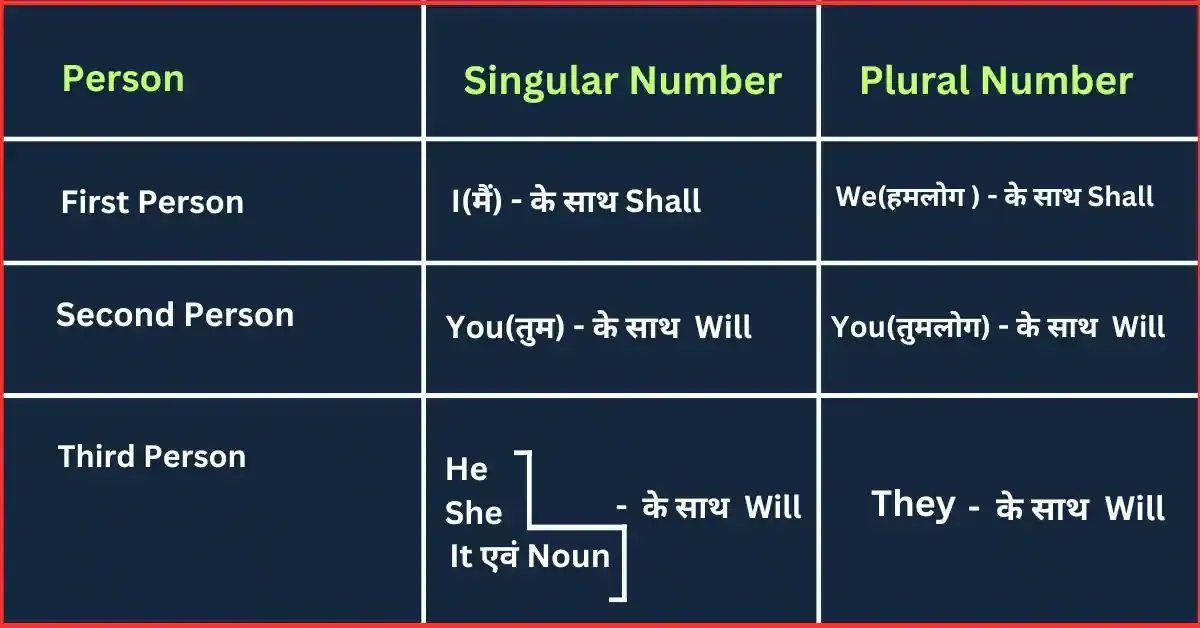 future tense examples in hindi to english ke liye First, Second aur Third Person ke saath 'Shall' aur 'Will' sahayak kriya ka sahi upyog
Future Indefinite Affirmative Examples
सकारात्मक वाक्य (Affirmative Sentences) साधारण घोषणाएं होती हैं। इनका अनुवाद Subject + Will + V1 के पैटर्न पर किया जाता है।
- I will go home tomorrow.
मैं कल घर जाऊँगा। - We will read the book.
हमलोग किताब पढ़ेंगे। - Shyam will take the examination.
श्याम परीक्षा देंगे। - You will finish your work soon.
तुम अपना काम जल्दी पूरा करोगे। - Geeta will come to me for help.
गीता सहायता के लिए मेरे पास आएगी। - The children will play in the park.
बच्चे पार्क में खेलेंगे। - Suresh will complete his assignment.
सुरेश अपना कार्य पूरा करेंगे। - He shall go to school (indicating a strong command or necessity).
वह अवश्य विद्यालय जाएगा। - They will buy a new car next month.
वे अगले महीने एक नई कार खरीदेंगे। - I will definitely do that work (indicating determination).
मैं वह काम जरूर करूँगा।
Future Indefinite Negative Examples
नकारात्मक वाक्यों (Negative Sentences) में सहायक क्रिया (Shall/Will) के तुरंत बाद ‘not’ लगाया जाता है।
Structure: Subject + shall/will + not + V1 + Object.
- I will not read the story.
मैं कहानी नहीं पढूँगा। - You will not take help from him.
तुम उससे सहायता नहीं लोगे। - Our brother will not take the exam this year.
हमारा भाई इस साल परीक्षा नहीं देंगे। - Anand will not do anything in his life.
आनंद अपने जिंदगी में कुछ नहीं करेंगे। - Rita will not do the required work.
रीता आवश्यक काम नहीं करेगी। - She will not work at home today.
वह आज घर में काम नहीं करेगी। - They will not help you in this matter.
वे लोग इस मामले में तुम्हारी मदद नहीं करेंगे। - We will not go home tomorrow.
हमलोग कल घर नहीं जायेंगे। - Your children will not eat dinner.
तुम्हारे बच्चे रात का खाना नहीं खाएंगे। - Saurabh will not do anything about this.
सौरभ इस बारे में कुछ नहीं करेंगे।
Future Indefinite Interrogative Examples
प्रश्नवाचक वाक्य दो प्रकार के होते हैं: Yes/No वाले और Question Word वाले। Yes/No प्रश्नों में सहायक क्रिया (Shall/Will) वाक्य की शुरुआत में आती है। Question Word (What, When, Why) बीच में आने पर वे सहायक क्रिया से पहले आते हैं।
Structure 1 (Yes/No): Shall/Will + Subject + V1 + Object?
Structure 2 (Wh-word): Wh-word + shall/will + Subject + V1 + Object?
- Will you go to school tomorrow?
क्या आप कल विद्यालय जाओगे? - Will people read this book?
क्या वे लोग यह किताब पढ़ेंगे? - When will Anita come back?
अनिता कब वापस आएगी? - Why will Shyam not take the exam this year?
श्याम इस वर्ष परीक्षा क्यों नहीं देंगे? - What will poor people do to survive?
गरीब लोग जीने के लिए क्या करेगा? - Where will you go for your vacation?
तुमलोग अपनी छुट्टी के लिए कहाँ जाएगा? - Will Devendra not give the entrance exam?
क्या देवेंद्र प्रवेश परीक्षा नहीं देंगे? - How will Dinesh study for the test?
दिनेश टेस्ट के लिए कैसे पढ़ेगा? - Why and how will he beat you?
वह तुम्हें क्यों और कैसे पिटेगा? - When will we go to the market?
हमलोग बाजार कब जाएँगे?
Future Continuous Tense: Nirantar Kriyaon Ko Samjhein
Future Continuous Tense उन क्रियाओं का वर्णन करता है जो भविष्य में किसी विशेष समय पर जारी रहेंगी। हिंदी वाक्यों में इसकी पहचान के लिए क्रिया के अंत में ‘रहा होगा’, ‘रही होगी’, ‘रहे होंगे’ आता है।
Pahchan Aur Sahayak Kriya
यह Tense बताता है कि कार्य शुरू हो चुका होगा और भविष्य में भी प्रगति पर रहेगा। इसका उपयोग भविष्य में चल रही अस्थायी कार्रवाइयों को इंगित करने के लिए किया जाता है। यह समय की निरंतरता को दर्शाता है।
Structure: Subject + shall/will + be + Verb (V4 or V1 + ing) + Object.
Continuous Tense Ke Vaakya Roop
इस संरचना में, ‘be’ एक महत्वपूर्ण कड़ी है जो निरंतरता को दर्शाता है। क्रिया का चौथा रूप (V4) अनिवार्य है।
Affirmative Examples:
- I will be watching a movie at 8 PM.
मैं रात 8 बजे एक फिल्म देख रहा हूँगा। - They will be playing cricket tomorrow afternoon.
वे कल दोपहर क्रिकेट खेल रहे होंगे। - She will be cooking dinner when he arrives.
जब वह आएगा, तब वह खाना बना रही होगी। - We will be studying for the final exam.
हम अंतिम परीक्षा के लिए पढ़ाई कर रहे होंगे। - The birds will be singing in the garden.
पक्षी बगीचे में गा रहे होंगे।
Negative Examples:
Negative में ‘not’ को will/shall और ‘be’ के बीच में रखा जाता है।
- The machine will not be working next week.
मशीन अगले सप्ताह काम नहीं कर रही होगी। - You will not be waiting for me tomorrow.
तुम कल मेरी प्रतीक्षा नहीं कर रहे होगे। - She will not be attending the party.
वह पार्टी में शामिल नहीं हो रही होगी।
Interrogative Examples:
- Will he be travelling to Delhi next month?
क्या वह अगले महीने दिल्ली यात्रा कर रहा होगा? - Why will they be shouting so loudly?
वे इतना जोर से क्यों चिल्ला रहे होंगे? - Will the students be taking notes during the lecture?
क्या छात्र व्याख्यान के दौरान नोट्स ले रहे होंगे?
Future Perfect Tense: Poorn Hone Wali Kriyaen
Future Perfect Tense उन क्रियाओं का वर्णन करता है जो भविष्य में किसी निर्दिष्ट समय बिंदु से पहले पूरी हो चुकी होंगी। हिंदी वाक्यों में अक्सर ‘चुका होगा’, ‘चुकी होगी’, ‘चुके होंगे’ का प्रयोग होता है। यह Tense कार्य के पूर्ण होने की निश्चितता पर जोर देता है।
Structure Aur Kriya Ka Roop
इस Tense में सहायक क्रिया के रूप में ‘will have’ या ‘shall have’ का प्रयोग होता है। इसके साथ क्रिया का तीसरा रूप (V3 – Past Participle) हमेशा उपयोग किया जाता है।
Structure: Subject + shall/will + have + Verb (V3) + Object.
Time Reference (Samay Sandarbh) Ka Mahatva
Future Perfect Tense को अक्सर समय के संदर्भ (Time Reference) के साथ प्रयोग किया जाता है। इसमें ‘by’ (तक) या ‘before’ (से पहले) जैसे शब्दों का प्रयोग होता है। यह समय संदर्भ यह बताता है कि कार्य किस समय सीमा तक पूरा हो जाएगा।
Perfect Tense Ke Vistrit Udaharan
Affirmative Examples:
- I will have finished my project by Monday.
मैं सोमवार तक अपना प्रोजेक्ट पूरा कर चुका हूँगा। - They will have left the city before sunrise.
वे सूर्योदय से पहले शहर छोड़ चुके होंगे। - She will have cooked the entire meal by 7 PM.
वह शाम 7 बजे तक पूरा खाना बना चुकी होगी। - We will have learned basic Spanish by the end of the course.
हम कोर्स के अंत तक बुनियादी स्पेनिश सीख चुके होंगे। - The shop will have closed by the time we reach there.
जब तक हम वहाँ पहुँचेंगे, दुकान बंद हो चुकी होगी।
Negative Examples:
‘Not’ का उपयोग ‘will/shall’ और ‘have’ के बीच में होता है।
- He will not have returned home by midnight.
वह आधी रात तक घर नहीं लौटा होगा। - The company will not have launched the product next quarter.
कंपनी अगली तिमाही तक उत्पाद लॉन्च नहीं कर चुकी होगी। - You will not have completed your training yet.
तुम अभी तक अपनी ट्रेनिंग पूरी नहीं कर चुके होगे।
Interrogative Examples:
- Will you have paid the bills before the due date?
क्या आप देय तिथि से पहले बिलों का भुगतान कर चुके होंगे? - What will they have decided by tomorrow morning?
वे कल सुबह तक क्या निर्णय ले चुके होंगे? - Will the movie have started when we reach the theatre?
क्या जब हम थिएटर पहुँचेंगे, तब तक फिल्म शुरू हो चुकी होगी?
Future Perfect Continuous Tense: Samay Se Lamba Kary
Future Perfect Continuous Tense भविष्य में एक निश्चित समय बिंदु तक किसी क्रिया के जारी रहने और उस क्रिया की अवधि (duration) पर जोर देता है। हिंदी वाक्यों में इसकी पहचान ‘रहा होगा’, ‘रही होगी’, ‘रहे होंगे’ होती है, साथ ही कार्य शुरू होने का समय भी दिया जाता है।
Pehchaan Aur Sanrachna
यह Tense सबसे जटिल Future Tense है और वास्तविक जीवन के संवादों में इसका प्रयोग बहुत कम होता है। इसका उपयोग तब होता है जब हम भविष्य में किसी कार्य की निरंतरता की अवधि को मापना चाहते हैं। ‘For’ (अवधि के लिए) और ‘Since’ (निश्चित समय बिंदु के लिए) का प्रयोग आवश्यक होता है।
Structure: Subject + shall/will + have been + Verb (V4) + Object + Since/For + Time.
Perfect Continuous Ka Visheshta Upyog
यह Tense विशेष रूप से उन परिदृश्यों को दर्शाता है जहाँ भविष्य में एक कार्य दूसरे कार्य के होने तक जारी रहेगा। यह दर्शाता है कि एक विशिष्ट समय तक, कार्रवाई की एक निश्चित अवधि पूरी हो चुकी होगी।
Udaharan: Samay Ke Saath Anuvaad
Affirmative Examples:
- By 2025, I will have been living in Mumbai for ten years.
2025 तक, मैं मुंबई में दस साल से रह रहा हूँगा। - She will have been waiting for two hours by the time the train arrives.
जब तक ट्रेन आएगी, वह दो घंटे से इंतजार कर रही होगी। - The researchers will have been collecting data since morning.
शोधकर्ता सुबह से डेटा एकत्र कर रहे होंगे। - We will have been studying English for five months next week.
अगले सप्ताह तक हम पाँच महीने से अंग्रेजी पढ़ रहे होंगे।
Negative Examples:
‘Not’ हमेशा ‘will/shall’ और ‘have’ के बीच में आता है।
- They will not have been working on the construction project for long.
वे लंबे समय से निर्माण परियोजना पर काम नहीं कर रहे होंगे। - He will not have been practicing his guitar regularly since last month.
वह पिछले महीने से नियमित रूप से गिटार का अभ्यास नहीं कर रहा होगा।
Interrogative Examples:
- Will you have been teaching at this school for a decade next year?
क्या आप अगले वर्ष तक इस स्कूल में एक दशक से पढ़ा रहे होंगे? - How long will she have been travelling when she reaches the destination?
जब वह गंतव्य पर पहुँचेगी, तब तक वह कितनी देर से यात्रा कर रही होगी?
E-E-A-T Section: Galatiyan Jinhe Taalna Chahiye
Future Tense का उपयोग करते समय कुछ सामान्य गलतियाँ होती हैं जिनसे बचना चाहिए। एक विशेषज्ञ की तरह संवाद करने के लिए इन सूक्ष्म अंतरों को समझना महत्वपूर्ण है।
Shall Aur Will Ke Prayog Mein Antar
जैसा कि पहले उल्लेख किया गया है, ‘Shall’ का प्रयोग अब मुख्य रूप से औपचारिक संदर्भों, कानूनी दस्तावेजों या प्रस्तावों (‘Shall we go?’) में होता है। रोजमर्रा की बातचीत में ‘Will’ प्रमुख है। कई बार छात्र I/We के साथ अनावश्यक रूप से ‘Shall’ का उपयोग करते हैं, जबकि ‘Will’ पूरी तरह से स्वीकार्य है। आधुनिक अंग्रेजी में, दृढ़ संकल्प को छोड़कर, I और We के साथ ‘Will’ का उपयोग करना सबसे सुरक्षित है।
Misplaced Time Adverbs
Future Tense में समय सूचक शब्दों (Time Adverbs) का सही स्थान बहुत महत्वपूर्ण है। क्रिया विशेषण (Adverbs) को हमेशा सही जगह पर रखना चाहिए। उदाहरण के लिए, “I will tomorrow go to the market” गलत है। सही वाक्य है: I will go to the market tomorrow. क्रिया विशेषण (जैसे tomorrow, soon, next week) वाक्य के अंत में आने चाहिए।
Future Tense Ke Chaaron Bhedon Ka Saar
चारों Future Tenses के नियमों को एक साथ देखने से उनकी वाक्य संरचना (Sentence Structure) स्पष्ट हो जाती है। Future Indefinite सबसे सामान्य है, जबकि Future Perfect Continuous सबसे विशिष्ट और कम उपयोग किया जाने वाला है।
| Tense Ka Bhed (Type) | Pahchan (Identification) | Sahayak Kriya (Helping Verb) | Mukhya Kriya (Main Verb) | Udaharan (Example) |
|---|---|---|---|---|
| Indefinite | गा, गी, गे | Will / Shall | V1 | He will study. |
| Continuous | रहा होगा, रही होगी | Will be / Shall be | V4 (V1 + ing) | He will be studying. |
| Perfect | चुका होगा, लिया होगा | Will have / Shall have | V3 | He will have studied. |
| Perfect Continuous | से रहा होगा, से रही होगी | Will have been / Shall have been | V4 (V1 + ing) | He will have been studying for hours. |
इन संरचनाओं का बार-बार अभ्यास करना future tense examples in hindi to english में महारत हासिल करने की कुंजी है। नियमों को याद करने के बजाय, उदाहरणों के माध्यम से उनके उपयोग को समझना अधिक प्रभावी है।
आपने इस विस्तृत मार्गदर्शिका में भविष्य काल के चारों भेदों को गहराई से समझा है। यह ज्ञान आपको न केवल नियमों को याद करने में मदद करेगा, बल्कि वास्तविक जीवन के संवादों में उनका सही उपयोग करने का आत्मविश्वास भी देगा। Future Tense के अलग-अलग रूपों को पहचानने और उनके अनुसार अनुवाद करने की क्षमता प्रभावी अंग्रेजी संचार के लिए अनिवार्य है। future tense examples in hindi to english का गहन अध्ययन सुनिश्चित करता है कि आपकी भविष्य की योजनाएं और प्रतिज्ञाएं अंग्रेजी में सटीकता के साथ व्यक्त हों। लगातार अभ्यास से ही आप इस व्याकरणिक पहलू में पूर्ण दक्षता प्राप्त कर सकते हैं।
Last Updated on 10/11/2025 by Emma Collins

Hello there! I’m Emma Collins, your English instructor at Skilled English. Learning a new language doesn’t have to be stressful or confusing — and I’m here to prove it. With over 6 years of experience teaching English to beginners, my goal is to help you feel confident in speaking, writing, and understanding English step by step. Read more


