

फ्यूचर परफेक्ट कंटीन्यूअस टेंस Future Perfect Continuous Tense Examples in Hindi to English Translation की गहरी समझ हिंदी भाषी छात्रों के लिए आवश्यक है। यह काल (Tense) भविष्य में एक निश्चित समय तक जारी रहने वाली क्रियाओं का वर्णन करता है। इस जटिल संरचना को समझना आपकी अंग्रेजी बोलने और लिखने की क्षमता को बढ़ाता है। हम यहां इस काल की पहचान, संरचना, और असंख्य व्यावहारिक उदाहरणों को विस्तार से जानेंगे। यह ज्ञान व्याकरण की बारीकियों को समझने में अत्यंत सहायक होगा, जिससे आप बिना किसी हिचकिचाहट के संवाद कर पाएंगे।
फ्यूचर परफेक्ट कंटीन्यूअस टेंस का परिचय
फ्यूचर परफेक्ट कंटीन्यूअस टेंस भविष्य काल का अंतिम और सबसे लंबा रूप है। यह उन क्रियाओं को दर्शाता है जो भविष्य में किसी विशेष समय बिंदु पर शुरू होकर, उस समय बिंदु के बाद भी जारी रहने की अपेक्षा की जाती हैं।
इस काल का मुख्य उद्देश्य समय की निरंतरता और अवधि पर जोर देना है। यह बताता है कि कार्य कितनी देर से चल रहा होगा। हिंदी भाषी छात्रों को इसकी पहचान और उपयोगिता जानना अत्यंत महत्वपूर्ण है ताकि वे समय संबंधी विचारों को सटीकता से व्यक्त कर सकें।
यह काल अक्सर उन स्थितियों में उपयोग होता है जहां कार्य भविष्य में शुरू होगा और निर्दिष्ट अवधि तक लगातार चलता रहेगा। इसका प्रयोग यह इंगित करता है कि कार्य अभी भी प्रगति पर है या जारी रहने की उम्मीद है।
पहचान: हिंदी वाक्यों में क्रियाओं की पहचान
हिंदी के जिन वाक्यों के अंत में ‘रहा होगा’, ‘रही होगी’, ‘रहे होंगे’, ‘रहा हूँगा’ जैसे शब्द आते हैं, और साथ ही कार्य शुरू होने का समय भी दिया होता है, वे वाक्य फ्यूचर परफेक्ट कंटीन्यूअस टेंस के अंतर्गत आते हैं।
समय अवधि (Time Period) का उल्लेख होना इस टेंस की सबसे महत्वपूर्ण पहचान है। यह समय अवधि ‘दो घंटे से’, ‘अगले साल से’, ‘सुबह से’ आदि के रूप में दी जाती है।
यदि समय अवधि का उल्लेख नहीं है, तो वाक्य फ्यूचर कंटीन्यूअस टेंस का हो सकता है। इसलिए समय के साथ ‘से’ का प्रयोग अनिवार्य है। इस काल में सहायक क्रिया (Auxiliary verb) के रूप में ‘Shall/Will have been’ का प्रयोग होता है।

फ्यूचर परफेक्ट कंटीन्यूअस टेंस की संरचना और नियम
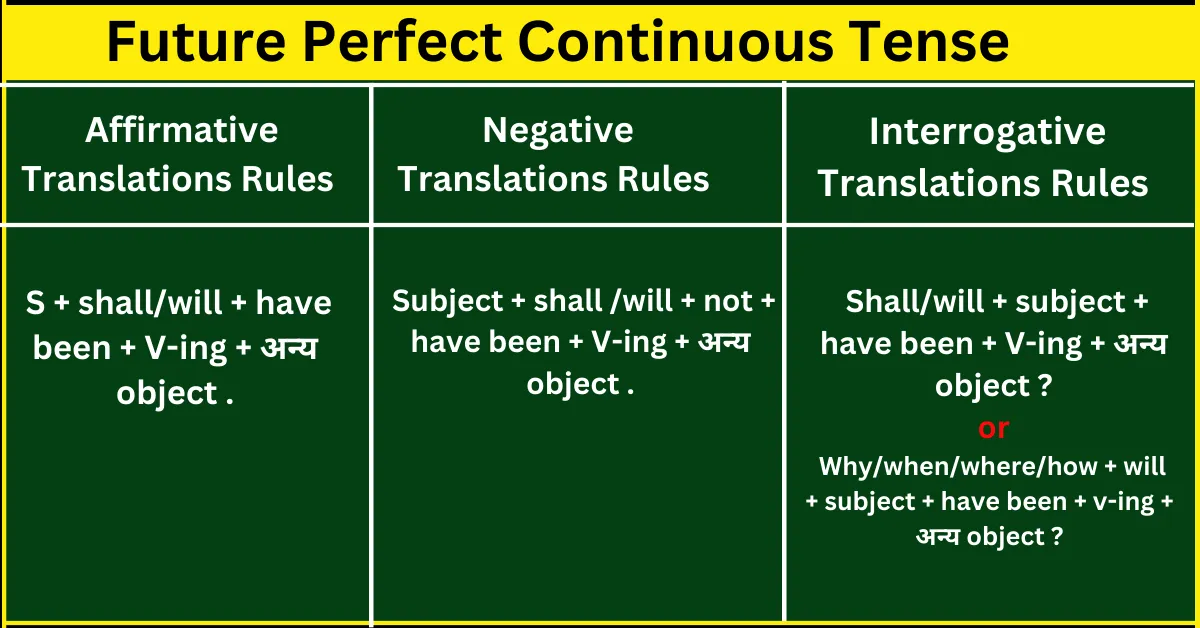
फ्यूचर परफेक्ट कंटीन्यूअस टेंस की संरचना चार मुख्य तत्वों पर आधारित होती है: कर्ता (Subject), सहायक क्रिया (Auxiliary Verb), क्रिया का चौथा रूप (V4), और समय का उल्लेख।
इस काल में सहायक क्रिया ‘will have been’ और ‘shall have been’ होती है। क्रिया के साथ हमेशा -ing का प्रयोग किया जाता है।
सहायक क्रिया (Helping Verb) का प्रयोग
पहला नियम सहायक क्रिया के चयन से संबंधित है। पारंपरिक रूप से ‘I’ और ‘We’ (First Person Singular and Plural) के साथ ‘Shall have been’ का प्रयोग किया जाता था।
अन्य सभी कर्ताओं (You, He, She, It, They, Singular/Plural Nouns) के साथ ‘Will have been’ का प्रयोग किया जाता है।
हालांकि, आधुनिक अंग्रेजी में ‘Will have been’ का प्रयोग सभी कर्ताओं के साथ स्वीकार्य है और यह अधिक सामान्य हो गया है। विशेष जोर देने के लिए ‘I’ और ‘We’ के साथ भी ‘Will have been’ का प्रयोग किया जा सकता है।
For और From का सही उपयोग
प्रेजेंट या पास्ट परफेक्ट कंटीन्यूअस टेंस में समय बताने के लिए ‘Since’ (निश्चित समय के लिए) और ‘For’ (अनिश्चित समय/अवधि के लिए) का प्रयोग होता है।
फ्यूचर परफेक्ट कंटीन्यूअस टेंस में ‘Since’ का प्रयोग नहीं किया जाता है। निश्चित समय बिंदु (Point of Time) जैसे: 2025 से, सोमवार से, 4 बजे से, आदि के लिए ‘From’ का प्रयोग किया जाता है।
अनिश्चित समय अवधि (Period of Time) जैसे: दो घंटे से, कई दिनों से, पाँच वर्षों से, आदि के लिए ‘For’ का प्रयोग किया जाता है।
{width=1200 height=628}
1. सकारात्मक वाक्यों (Affirmative Sentences) के उदाहरण और अनुवाद
सकारात्मक वाक्यों में किसी कार्य के भविष्य में जारी रहने की पुष्टि की जाती है। यह वाक्य संरचना सबसे सरल होती है और इसे समझने से आधार मजबूत होता है।
सकारात्मक वाक्य संरचना (Structure)
वाक्य का क्रम इस प्रकार होगा:
Subject + Shall/Will have been + V-ing + Object (यदि हो) + For/From + Time.
उदाहरणों के माध्यम से इस संरचना को स्पष्ट रूप से समझा जा सकता है।
50 उदाहरण: हिंदी से अंग्रेजी अनुवाद
- मैं सुबह से आपकी प्रतीक्षा करता रहूँगा। – I shall have been waiting for you since morning.
- (नोट: यहाँ ‘Since morning’ के स्थान पर modern English में ‘From morning’ या ‘since’ का प्रयोग हो सकता है, लेकिन पारंपरिक फ्यूचर टेंस नियम इसे प्रतिबंधित करते हैं। अतः ‘From’ का प्रयोग बेहतर है, या इसे ‘By the morning’ में बदला जा सकता है। लेकिन सरल अभ्यास के लिए ‘From’ का उपयोग किया जाएगा।)
- हम दो घंटे से नदी में तैरते रहेंगे। – We shall have been swimming in the river for two hours.
- यह वाक्य बताता है कि तैरने की क्रिया दो घंटे की अवधि तक जारी रहेगी।
- वह अगले साल से इस कंपनी में काम कर रही होगी। – She will have been working in this company from next year.
- क्रिया ‘काम करना’ है, जो अगले साल से शुरू होकर जारी रहने की उम्मीद है।
- वे कल शाम से क्रिकेट खेलते रहेंगे। – They will have been playing cricket from tomorrow evening.
- एक निश्चित समय बिंदु (‘कल शाम’) से कार्य जारी रहेगा।
- सूरज दस मिनट से चमक रहा होगा। – The sun will have been shining for ten minutes.
- चमकने की क्रिया दस मिनट की अवधि के लिए जारी रहेगी।
- आप वर्षों से गरीबों की मदद करते रहेंगे। – You will have been helping the poor for years.
- ‘वर्षों से’ अनिश्चित समय अवधि है, इसलिए ‘For’ का प्रयोग हुआ है।
- मेरा भाई 2025 से विदेश में पढ़ाई कर रहा होगा। – My brother will have been studying abroad from 2025.
- माली सुबह से पौधों को पानी देता रहेगा। – The gardener will have been watering the plants from the morning.
- शिक्षक एक घंटे से छात्रों को पढ़ा रहे होंगे। – The teacher will have been teaching the students for an hour.
- बच्चे पार्क में शाम तक दौड़ते रहेंगे। – The children will have been running in the park until the evening.
- हम लोग अगले महीने से नए घर में रह रहे होंगे। – We shall have been living in the new house from next month.
- सीमा दो सप्ताह से उपन्यास लिख रही होगी। – Seema will have been writing a novel for two weeks.
- किसान कई घंटों से खेतों में हल चला रहे होंगे। – The farmers will have been ploughing the fields for many hours.
- मैं चार बजे से अपनी परीक्षा की तैयारी करता रहूँगा। – I shall have been preparing for my exam from four o’clock.
- तुम आधी रात तक यह फिल्म देखते रहोगे। – You will have been watching this movie until midnight.
- वह सोमवार से स्कूल जा रही होगी। – She will have been going to school from Monday.
- मेरी बहन पाँच मिनट से गाना गा रही होगी। – My sister will have been singing a song for five minutes.
- वे दस साल से एक-दूसरे को जानते रहेंगे। – They will have been knowing each other for ten years.
- डॉक्टर सुबह 9 बजे से मरीजों का इलाज करते रहेंगे। – The doctor will have been treating patients from 9 AM.
- पक्षी सुबह से आसमान में उड़ते रहेंगे। – The birds will have been flying in the sky from the morning.
- छात्र तीन घंटे से पुस्तकालय में पढ़ते रहेंगे। – Students will have been reading in the library for three hours.
- मैं शाम से टीवी देख रहा हूँगा। – I shall have been watching TV from the evening.
- मोहन कई वर्षों से एक परियोजना पर काम कर रहा होगा। – Mohan will have been working on a project for many years.
- पिताजी एक महीने से विदेश यात्रा की योजना बनाते रहेंगे। – Father will have been planning a foreign trip for a month.
- तुम अगले सप्ताह से फ्रेंच सीखते रहोगे। – You will have been learning French from next week.
- वह चार बजे तक कपड़े धो रही होगी। – She will have been washing clothes until four o’clock.
- हम एक साल से इस शहर में रहते रहेंगे। – We shall have been residing in this city for a year.
- पुलिसकर्मी रात भर गश्त करते रहेंगे। – The policemen will have been patrolling all night long.
- दर्जी कल से मेरे लिए सूट सिलता रहेगा। – The tailor will have been stitching a suit for me from tomorrow.
- मैं 2030 से इस भाषा को बोलता रहूँगा। – I shall have been speaking this language from 2030.
- गायें सुबह से मैदान में चरती रहेंगी। – The cows will have been grazing in the field from the morning.
- खिलाड़ी अभ्यास के लिए घंटों तक पसीना बहाते रहेंगे। – The players will have been sweating for hours for practice.
- वर्षा तीन दिन से लगातार हो रही होगी। – It will have been raining continuously for three days.
- मेरा दोस्त एक सप्ताह से मेरी सहायता करता रहेगा। – My friend will have been helping me for a week.
- आप अगले मंगलवार से नए कार्यालय में काम करते रहेंगे। – You will have been working in the new office from next Tuesday.
- वह तीन साल से अपने लक्ष्य का पीछा कर रही होगी। – She will have been pursuing her goal for three years.
- हम लोग सुबह 7 बजे से नाश्ता तैयार करते रहेंगे। – We shall have been preparing breakfast from 7 AM.
- बच्चे आधी रात तक खिलौनों से खेलते रहेंगे। – The children will have been playing with toys until midnight.
- मैं अगले महीने से योग का अभ्यास करता रहूँगा। – I shall have been practicing yoga from next month.
- वे पाँच वर्षों से अपने व्यवसाय का विस्तार करते रहेंगे। – They will have been expanding their business for five years.
- इंजीनियर सुबह से पुल का निर्माण करते रहेंगे। – The engineers will have been constructing the bridge from the morning.
- मरीज दो घंटे से दवा ले रहा होगा। – The patient will have been taking medicine for two hours.
- आप कल तक इस पुस्तक को पढ़ते रहेंगे। – You will have been reading this book until tomorrow.
- रानी 2026 से शास्त्रीय नृत्य सीख रही होगी। – Rani will have been learning classical dance from 2026.
- हम एक सप्ताह से अपने प्रोजेक्ट पर विचार-विमर्श करते रहेंगे। – We shall have been deliberating on our project for a week.
- मेरा कुत्ता कई मिनटों से भौंक रहा होगा। – My dog will have been barking for several minutes.
- वह पूरे दिन घर की सफाई करती रहेगी। – She will have been cleaning the house all day.
- मैं रात 10 बजे तक ऑनलाइन क्लास लेता रहूँगा। – I shall have been taking online classes until 10 PM.
- वे सुबह से पहाड़ों में ट्रैकिंग करते रहेंगे। – They will have been trekking in the mountains from the morning.
- छात्र अपनी नोटबुक में नोट्स लिखते रहेंगे। – The students will have been writing notes in their notebooks.
2. नकारात्मक वाक्यों (Negative Sentences) के उदाहरण और अनुवाद
नकारात्मक वाक्य भविष्य में किसी कार्य के एक निश्चित अवधि तक जारी न रहने का बोध कराते हैं। इनमें सहायक क्रिया के बाद ‘not’ का प्रयोग किया जाता है।
नकारात्मक वाक्य संरचना (Structure)
नकारात्मक वाक्यों की संरचना में ‘will’ या ‘shall’ के तुरंत बाद ‘not’ का प्रयोग होता है।
Subject + Shall/Will + not + have been + V-ing + Object + For/From + Time.
‘will not’ के संक्षिप्त रूप ‘won’t’ का भी प्रयोग बोलचाल में किया जाता है।
50 उदाहरण: हिंदी से अंग्रेजी अनुवाद
- मैं सुबह से खाना नहीं खा रहा हूँगा। – I shall not have been eating food from the morning.
- खाना खाने की क्रिया सुबह से जारी नहीं रहेगी।
- हम चार घंटे से फुटबॉल नहीं खेलते रहेंगे। – We shall not have been playing football for four hours.
- वह अगले महीने से जिम नहीं जा रही होगी। – She will not have been going to the gym from next month.
- वे वर्षों से इस घर में नहीं रहते रहेंगे। – They will not have been living in this house for years.
- सूरज कल दोपहर से अस्त नहीं हो रहा होगा। – The sun will not have been setting from tomorrow afternoon.
- आप दो सप्ताह से यात्रा नहीं करते रहेंगे। – You will not have been traveling for two weeks.
- मेरा दोस्त 2024 से विदेश में नौकरी नहीं करता रहेगा। – My friend will not have been working abroad from 2024.
- रसोईया सुबह से चाय नहीं बना रहा होगा। – The cook will not have been making tea from the morning.
- अध्यापक आधे घंटे से पाठ नहीं पढ़ा रहे होंगे। – The teacher will not have been teaching the lesson for half an hour.
- बच्चे रात तक जागते नहीं रहेंगे। – The children will not have been staying awake until night.
- हम अगले बुधवार से अंग्रेजी नहीं सीखते रहेंगे। – We shall not have been learning English from next Wednesday.
- रिया कई दिनों से अपनी डायरी नहीं लिख रही होगी। – Riya will not have been writing her diary for many days.
- मजदूर घंटों से काम नहीं कर रहे होंगे। – The laborers will not have been working for hours.
- मैं शाम 5 बजे से कपड़े नहीं धोता रहूँगा। – I shall not have been washing clothes from 5 PM.
- तुम पूरी रात संगीत नहीं सुनते रहोगे। – You will not have been listening to music all night.
- वह अगले सोमवार से ऑफिस नहीं जा रही होगी। – She will not have been going to the office from next Monday.
- मेरा भाई दस मिनट से फोन पर बात नहीं कर रहा होगा। – My brother will not have been talking on the phone for ten minutes.
- वे कई सालों से एक-दूसरे से नहीं लड़ते रहेंगे। – They will not have been fighting with each other for many years.
- प्रबंधक सुबह 8 बजे से बैठक नहीं कर रहा होगा। – The manager will not have been holding a meeting from 8 AM.
- पंखे सुबह से नहीं चल रहे होंगे। – The fans will not have been running from the morning.
- छात्र दो पीरियड से कंप्यूटर लैब में नहीं बैठते रहेंगे। – Students will not have been sitting in the computer lab for two periods.
- मैं कल रात से सोता नहीं रहूँगा। – I shall not have been sleeping from last night.
- दुकानदार पूरे दिन अपनी दुकान नहीं खोलते रहेंगे। – The shopkeepers will not have been opening their shops all day.
- मेरी दादी एक घंटे से पूजा नहीं कर रही होंगी। – My grandmother will not have been praying for an hour.
- तुम महीनों से किताबें नहीं पढ़ते रहोगे। – You will not have been reading books for months.
- वह दो सप्ताह से अपने प्रोजेक्ट पर काम नहीं कर रही होगी। – She will not have been working on her project for two weeks.
- हम इस सप्ताह से क्रिकेट का अभ्यास नहीं करते रहेंगे। – We shall not have been practicing cricket from this week.
- सैनिक घंटों से सीमा पर खड़े नहीं रहेंगे। – The soldiers will not have been standing at the border for hours.
- ड्राइवर तीन बजे से बस नहीं चलाता रहेगा। – The driver will not have been driving the bus from three o’clock.
- मैं अगले दशक से व्यापार नहीं करता रहूँगा। – I shall not have been doing business from the next decade.
- चपरासी सुबह से घंटी नहीं बजाता रहेगा। – The peon will not have been ringing the bell from the morning.
- दर्शक पूरे मैच के दौरान शोर नहीं मचाते रहेंगे। – The spectators will not have been making noise throughout the match.
- बर्फबारी सुबह से नहीं हो रही होगी। – It will not have been snowing from the morning.
- मेरी टीम तीन मैचों से हारती नहीं रहेगी। – My team will not have been losing for three matches.
- आप अगले वर्ष से विदेश में नहीं रहते रहेंगे। – You will not have been living abroad from next year.
- वह दो दिनों से मेरे साथ नहीं बोल रही होगी। – She will not have been talking to me for two days.
- हम कल सुबह से ट्रेन का इंतजार नहीं करते रहेंगे। – We shall not have been waiting for the train from tomorrow morning.
- बच्चे शाम तक घर पर नहीं खेलते रहेंगे। – The children will not have been playing at home until the evening.
- मैं अगले महीने से खाना बनाना नहीं सीखता रहूँगा। – I shall not have been learning cooking from next month.
- वे वर्षों से अपने घर को रिनोवेट नहीं करते रहेंगे। – They will not have been renovating their house for years.
- बढ़ई घंटों से फर्नीचर नहीं बनाता रहेगा। – The carpenter will not have been making furniture for hours.
- नर्स पूरे दिन ड्यूटी नहीं करती रहेगी। – The nurse will not have been doing duty all day.
- आप घंटों से भाषण नहीं देते रहेंगे। – You will not have been giving a speech for hours.
- मेरी सहेली कल से संगीत नहीं सुन रही होगी। – My friend will not have been listening to music from tomorrow.
- हम दो साल से इस प्रोजेक्ट पर सहयोग नहीं करते रहेंगे। – We shall not have been collaborating on this project for two years.
- मेरा फोन एक घंटे से काम नहीं कर रहा होगा। – My phone will not have been working for an hour.
- वह दो बजे से सब्जियां नहीं काट रही होगी। – She will not have been chopping vegetables from two o’clock.
- मैं अगले सप्ताह से काम नहीं करता रहूँगा। – I shall not have been working from next week.
- वे सुबह से मछली नहीं पकड़ते रहेंगे। – They will not have been catching fish from the morning.
- छात्र अपनी परीक्षा के लिए घंटों से नहीं पढ़ते रहेंगे। – Students will not have been studying for their exam for hours.
3. प्रश्नवाचक वाक्यों (Interrogative Sentences) के उदाहरण और अनुवाद
प्रश्नवाचक वाक्य दो प्रकार के होते हैं: Yes/No वाले प्रश्न और Wh-Family वाले प्रश्न। दोनों की संरचना अलग-अलग होती है और इनका उद्देश्य जानकारी प्राप्त करना होता है।
A. Yes/No प्रश्न (क्या से शुरू होने वाले)
ये प्रश्न ‘क्या’ शब्द से शुरू होते हैं और इनका उत्तर हाँ या ना में दिया जा सकता है। इसमें सहायक क्रिया (Will/Shall) वाक्य की शुरुआत में आती है।
संरचना: Shall/Will + Subject + have been + V-ing + Object + For/From + Time?
50 उदाहरण:
- क्या मैं सुबह से अंग्रेजी सीखता रहूँगा? – Shall I have been learning English from the morning?
- क्या तुम दो साल से नौकरी करते रहोगे? – Will you have been doing a job for two years?
- क्या वह कल दोपहर से खाना पका रही होगी? – Will she have been cooking food from tomorrow afternoon?
- क्या वे घंटों से बहस करते रहेंगे? – Will they have been arguing for hours?
- क्या हम एक महीने से व्यायाम करते रहेंगे? – Shall we have been exercising for a month?
- क्या रमेश 2035 से व्यवसाय चलाता रहेगा? – Will Ramesh have been running a business from 2035?
- क्या बारिश रात भर होती रहेगी? – Will it have been raining all night?
- क्या बच्चे 10 मिनट से शोर मचाते रहेंगे? – Will the children have been making noise for 10 minutes?
- क्या माली सुबह से फूल तोड़ता रहेगा? – Will the gardener have been plucking flowers from the morning?
- क्या मैं अगले सोमवार से ऑफिस जाता रहूँगा? – Shall I have been going to the office from next Monday?
- क्या तुम तीन बजे से बस का इंतजार करते रहोगे? – Will you have been waiting for the bus from three o’clock?
- क्या वह घंटों से कपड़े सिल रही होगी? – Will she have been stitching clothes for hours?
- क्या हम लोग अगले साल से नया घर बनाते रहेंगे? – Shall we have been constructing a new house from next year?
- क्या नेता महीनों से प्रचार करते रहेंगे? – Will the leaders have been campaigning for months?
- क्या मेरा भाई सुबह से अखबार पढ़ता रहेगा? – Will my brother have been reading the newspaper from the morning?
- क्या आप वर्षों से गरीबों को दान देते रहेंगे? – Will you have been donating to the poor for years?
- क्या वह दो दिनों से दौड़ रही होगी? – Will she have been running for two days?
- क्या वे 2028 से विदेश में पढ़ाई करते रहेंगे? – Will they have been studying abroad from 2028?
- क्या मैं आधे घंटे से तुम्हारा मार्गदर्शन करता रहूँगा? – Shall I have been guiding you for half an hour?
- क्या लड़की घंटों से नृत्य करती रहेगी? – Will the girl have been dancing for hours?
- क्या छात्र दो साल से प्रतियोगी परीक्षा की तैयारी करते रहेंगे? – Will the students have been preparing for the competitive exam for two years?
- क्या हम शनिवार से इस प्रोजेक्ट पर काम करते रहेंगे? – Shall we have been working on this project from Saturday?
- क्या तुम दो घंटे से फिल्म देखते रहोगे? – Will you have been watching a movie for two hours?
- क्या वह सुबह से सब्जियां बेच रही होगी? – Will she have been selling vegetables from the morning?
- क्या लोग पूरी रात जागते रहेंगे? – Will people have been staying awake all night?
- क्या मैं अगले हफ्ते से किताबें लिखता रहूँगा? – Shall I have been writing books from next week?
- क्या तुम वर्षों से संगीत सीखते रहोगे? – Will you have been learning music for years?
- क्या वह कई दिनों से अपने दोस्त से मिल रही होगी? – Will she have been meeting her friend for several days?
- क्या वे 11 बजे तक काम पूरा करते रहेंगे? – Will they have been completing the work until 11 o’clock?
- क्या हम चार दिनों से पहाड़ों में घूमते रहेंगे? – Shall we have been roaming in the mountains for four days?
- क्या शिक्षक अगले महीने से ऑनलाइन कक्षाएं लेते रहेंगे? – Will the teacher have been taking online classes from next month?
- क्या मेरा चचेरा भाई एक घंटे से गिटार बजाता रहेगा? – Will my cousin have been playing the guitar for an hour?
- क्या आप कल से अंग्रेजी बोलते रहेंगे? – Will you have been speaking English from tomorrow?
- क्या वह दो सप्ताह से कविताएं लिख रही होगी? – Will she have been writing poems for two weeks?
- क्या मैं शाम तक अपनी कार धोता रहूँगा? – Shall I have been washing my car until the evening?
- क्या वे तीन साल से बचत करते रहेंगे? – Will they have been saving money for three years?
- क्या पुलिसकर्मी सुबह से चोर का पीछा करते रहेंगे? – Will the policeman have been chasing the thief from the morning?
- क्या तुम अगले साल से विदेश में व्यापार करते रहोगे? – Will you have been doing business abroad from next year?
- क्या वह एक महीने से योग का अभ्यास कर रही होगी? – Will she have been practicing yoga for a month?
- क्या हम कल से नए नियमों का पालन करते रहेंगे? – Shall we have been following the new rules from tomorrow?
- क्या बच्चे सुबह से अपनी गुल्लक में पैसे जमा करते रहेंगे? – Will the children have been depositing money in their piggy bank from the morning?
- क्या मैं दो घंटे से पत्र लिखता रहूँगा? – Shall I have been writing a letter for two hours?
- क्या तुम पूरे दिन फोन पर बात करते रहोगे? – Will you have been talking on the phone all day?
- क्या वह 2020 से यह नौकरी कर रही होगी? – Will she have been doing this job from 2020?
- क्या वे तीन दिनों से परीक्षा के लिए तैयारी करते रहेंगे? – Will they have been preparing for the exam for three days?
- क्या हम एक सप्ताह से अपने स्वास्थ्य का ध्यान रखते रहेंगे? – Shall we have been taking care of our health for a week?
- क्या कुत्ता रात भर भौंकता रहेगा? – Will the dog have been barking all night?
- क्या आप तीन घंटे से ऑनलाइन काम करते रहेंगे? – Will you have been working online for three hours?
- क्या वह सोमवार से मेरी प्रतीक्षा करती रहेगी? – Will she have been waiting for me from Monday?
- क्या मैं महीनों से इस विषय पर शोध करता रहूँगा? – Shall I have been researching this topic for months?
B. Wh-Family प्रश्न (कब, क्यों, कैसे आदि)
ये प्रश्न ‘Why’, ‘When’, ‘How’, ‘What’ जैसे शब्दों से शुरू होते हैं, और इनके उत्तर में विशिष्ट जानकारी की आवश्यकता होती है।
संरचना: Wh-Word + Shall/Will + Subject + have been + V-ing + Object + For/From + Time?
50 उदाहरण:
- तुम सुबह से क्या पढ़ते रहोगे? – What will you have been reading from the morning?
- वह महीनों से यहाँ क्यों आती रहेगी? – Why will she have been coming here for months?
- वे 2030 से कहाँ काम करते रहेंगे? – Where will they have been working from 2030?
- मैं घंटों से कैसे सीखता रहूँगा? – How shall I have been learning for hours?
- हम अगले सप्ताह से किस परियोजना पर काम करते रहेंगे? – Which project shall we have been working on from next week?
- बच्चे दो घंटे से क्यों रोते रहेंगे? – Why will the children have been crying for two hours?
- वह 10 बजे तक कहाँ जा रही होगी? – Where will she have been going until 10 o’clock?
- तुम दो दिन से क्या सोचते रहोगे? – What will you have been thinking about for two days?
- वे वर्षों से यह खेल कैसे खेलते रहेंगे? – How will they have been playing this game for years?
- मैं इतनी देर से किसका इंतजार करता रहूँगा? – Whose will I have been waiting for for so long?
- हम शुक्रवार से कहाँ ट्रेनिंग लेते रहेंगे? – Where shall we have been taking training from Friday?
- वह कल शाम से क्या कर रही होगी? – What will she have been doing from tomorrow evening?
- तुम तीन घंटे से किस विषय पर बात करते रहोगे? – Which subject will you have been talking about for three hours?
- वे 2040 से क्यों यात्रा करते रहेंगे? – Why will they have been traveling from 2040?
- मैं सुबह से किससे मिलता रहूँगा? – Whom shall I have been meeting from the morning?
- आप वर्षों से क्या बेचते रहेंगे? – What will you have been selling for years?
- वह दो महीने से क्यों तैयारी कर रही होगी? – Why will she have been preparing for two months?
- वे शाम तक कितना कमाते रहेंगे? – How much will they have been earning until the evening?
- मैं सोमवार से कौन सी किताब पढ़ता रहूँगा? – Which book shall I have been reading from Monday?
- तुम दो घंटे से क्यों हँसते रहोगे? – Why will you have been laughing for two hours?
- वह वर्षों से कैसे पढ़ा रही होगी? – How will she have been teaching for years?
- हम कल से क्या सीखते रहेंगे? – What shall we have been learning from tomorrow?
- वे सुबह से किसे देख रहे होंगे? – Whom will they have been seeing from the morning?
- आप दो सप्ताह से कहाँ रहते रहेंगे? – Where will you have been staying for two weeks?
- मैं अगले महीने से क्यों लिखता रहूँगा? – Why shall I have been writing from next month?
- बच्चे इतनी देर से किसलिए झगड़ते रहेंगे? – What will the children have been quarreling for for so long?
- वह 7 बजे से क्या खा रही होगी? – What will she have been eating from 7 o’clock?
- तुम घंटों से क्यों रोते रहोगे? – Why will you have been crying for hours?
- वे 2027 से कौन सी भाषा बोलते रहेंगे? – Which language will they have been speaking from 2027?
- मैं कब से इस प्रोजेक्ट पर काम करता रहूँगा? – Since when shall I have been working on this project?
- आप दो साल से कहाँ पढ़ाते रहेंगे? – Where will you have been teaching for two years?
- वह सुबह से क्यों नृत्य कर रही होगी? – Why will she have been dancing from the morning?
- हम कल तक कितने पृष्ठ पढ़ते रहेंगे? – How many pages shall we have been reading until tomorrow?
- वे वर्षों से किस कंपनी में निवेश करते रहेंगे? – Which company will they have been investing in for years?
- तुम तीन दिनों से क्या देख रहे होगे? – What will you have been seeing for three days?
- वह अगले सोमवार से कैसे आ रही होगी? – How will she have been coming from next Monday?
- मैं कब तक यह काम करता रहूँगा? – Until when shall I have been doing this work?
- आप इतने लंबे समय से क्यों प्रतीक्षा करते रहेंगे? – Why will you have been waiting for so long?
- वह दो घंटे से क्या सुन रही होगी? – What will she have been listening to for two hours?
- वे पूरे दिन कैसे काम करते रहेंगे? – How will they have been working all day?
- मैं कौन सी पुस्तक पढ़ता रहूँगा? – Which book shall I have been reading?
- तुम 2025 से कहाँ रहते रहोगे? – Where will you have been living from 2025?
- वह सुबह से किससे बात कर रही होगी? – Whom will she have been talking to from the morning?
- हम चार दिनों से क्यों यात्रा करते रहेंगे? – Why shall we have been traveling for four days?
- वे घंटों से किसका इंतजार करते रहेंगे? – Whose will they have been waiting for for hours?
- मैं कब तक पढ़ता रहूँगा? – Until when shall I have been studying?
- आप कल से क्या लिखते रहेंगे? – What will you have been writing from tomorrow?
- वह वर्षों से कैसे कमा रही होगी? – How will she have been earning for years?
- वे सुबह से किसे फ़ोन करते रहेंगे? – Whom will they have been calling from the morning?
- तुम एक सप्ताह से क्या बनाते रहोगे? – What will you have been making for a week?
सामान्य गलतियाँ और उनका सुधार
फ्यूचर परफेक्ट कंटीन्यूअस टेंस का प्रयोग करते समय हिंदी भाषी छात्रों द्वारा कुछ सामान्य त्रुटियाँ की जाती हैं। इन्हें समझना और सुधारना आपकी अंग्रेजी व्याकरण को त्रुटिहीन बनाता है।
1. Since का गलत प्रयोग
सबसे बड़ी और आम गलती ‘Since’ का प्रयोग है। फ्यूचर टेंस में ‘Since’ का प्रयोग पूरी तरह से गलत माना जाता है।
- गलत: She will have been waiting since 2 o’clock.
- सही: She will have been waiting from 2 o’clock. (निश्चित समय के लिए ‘From’ का प्रयोग करें।)
2. सहायक क्रिया में भ्रम
कई छात्र ‘will have been’ या ‘shall have been’ में से ‘been’ को छोड़ देते हैं या ‘have’ को भूल जाते हैं। यह याद रखना महत्वपूर्ण है कि यह संरचना तीनों शब्दों (will/shall + have + been) से मिलकर बनती है।
- गलत: He will been running for hours.
- सही: He will have been running for hours.
3. Not का स्थान
नकारात्मक वाक्यों में ‘not’ का स्थान ‘will/shall’ और ‘have been’ के बीच में होना चाहिए, न कि ‘have been’ के बाद।
- गलत: They will have been not playing from morning.
- सही: They will not have been playing from morning.
4. V-ing फॉर्म को भूलना
यह कंटीन्यूअस टेंस है, इसलिए क्रिया का चौथा रूप (Base Verb + ing) अनिवार्य है। यदि ‘ing’ फॉर्म का प्रयोग नहीं किया जाता है, तो वाक्य गलत हो जाता है।
- गलत: We shall have been study for an hour.
- सही: We shall have been studying for an hour.
5. निश्चित और अनिश्चित समय की पहचान
‘For’ का प्रयोग अनिश्चित अवधि (दो घंटे, तीन सप्ताह) के लिए होता है। ‘From’ का प्रयोग निश्चित शुरुआती बिंदु (सोमवार, 2025) के लिए होता है। इस अंतर को समझना आवश्यक है।
- गलत: You will have been teaching from two hours. (दो घंटे अनिश्चित अवधि है।)
- सही: You will have been teaching for two hours.
निष्कर्ष में, Future Perfect Continuous Tense Examples in Hindi to English Translation की प्रक्रिया को सफलतापूर्वक पूरा करने के लिए नियम और संरचना की स्पष्ट समझ जरूरी है। यह काल अंग्रेजी व्याकरण का एक मजबूत हिस्सा है, जो भविष्य में जारी रहने वाली क्रियाओं को सटीकता से व्यक्त करने में मदद करता है। Will/Shall + have been + V-ing का सही प्रयोग और From/For का उचित उपयोग ही इस काल की मास्टरिंग की कुंजी है। इन विस्तृत उदाहरणों और नियमों का अभ्यास करके, हिंदी भाषी छात्र अपनी कम्युनिकेशन स्किल्स को अगले स्तर तक ले जा सकते हैं और अंग्रेजी में समय की निरंतरता को आत्मविश्वास के साथ दर्शा सकते हैं।
Last Updated on 10/11/2025 by Emma Collins

Hello there! I’m Emma Collins, your English instructor at Skilled English. Learning a new language doesn’t have to be stressful or confusing — and I’m here to prove it. With over 6 years of experience teaching English to beginners, my goal is to help you feel confident in speaking, writing, and understanding English step by step. Read more


