
अंग्रेजी सीखने की यात्रा में Tenses को समझना सबसे महत्वपूर्ण कदम है। विशेषकर, Past Perfect Tense (पूर्ण भूतकाल) अक्सर छात्रों को भ्रमित करता है क्योंकि इसमें समय की दो दोहरी भूतकाल क्रियाएं शामिल होती हैं। यह लेख Skilledenglish.com के मंच पर आपको इस जटिल विषय को सरल बनाने में मदद करेगा। हम न केवल नियमों को समझेंगे, बल्कि विस्तृत Had के नियम और अभ्यास भी करेंगे। यह मार्गदर्शिका आपको Simple Past Tense के साथ इसके जटिल संबंध को स्पष्ट रूप से समझने में मदद करेगी।
Past Perfect Tense: परिभाषा और आवश्यकता (Definition and Necessity)
Past Perfect Tense उस क्रिया को दर्शाता है जो भूतकाल में किसी अन्य क्रिया के होने से पहले ही पूरी तरह समाप्त हो चुकी थी। हिंदी में इसकी पहचान वाक्यों के अंत में ‘चुका था’, ‘चुकी थी’, ‘चुके थे’ या ‘लिया था’, ‘दिया था’ आदि से होती है। इस काल में सहायक क्रिया (Auxiliary Verb) के रूप में हमेशा had का प्रयोग होता है, जिसके बाद क्रिया का तीसरा रूप (V3) आता है।
यह Tense कभी भी अकेले प्रयोग नहीं होता। यदि आप सिर्फ कहते हैं, “मैं खा चुका था,” तो यह वाक्य अधूरा लगता है। श्रोता तुरंत प्रश्न करेगा, “कब?” Past Perfect Tense को अपना पूर्ण अर्थ देने के लिए हमेशा Simple Past Tense (Past Indefinite) की आवश्यकता होती है। यह दो भूतकालीन घटनाओं के बीच के क्रम को स्थापित करता है।
जिस कार्य को आपने पहले पूरा किया था, उसे Past Perfect Tense में रखा जाता है। जो कार्य उसके बाद हुआ, उसे Simple Past Tense में रखा जाता है। समय के क्रम को स्पष्ट करना ही इस Tense का प्राथमिक कार्य है।
Past Perfect Tense में सहायक क्रिया Had का प्रयोग (Use of Auxiliary Verb Had)
Past Perfect Tense की सबसे अच्छी बात यह है कि इसमें कर्ता (Subject) के लिंग या वचन का कोई प्रभाव नहीं पड़ता। सभी Subjects (I, We, You, He, She, It, They, Singular, Plural) के साथ केवल had का ही प्रयोग होता है। यह सीखने की प्रक्रिया को बहुत सरल बनाता है।
| Person | Singular Subject | Plural Subject |
|---|---|---|
| First Person | I had (मैं कर चुका था) | We had (हम कर चुके थे) |
| Second Person | You had (तुम कर चुके थे) | You had (तुम/आप कर चुके थे) |
| Third Person | He/She/It/Name had (वह कर चुका था) | They/The boys had (वे कर चुके थे) |
उदाहरण:
- She had finished her homework.
उसने अपना गृहकार्य समाप्त कर लिया था। - The students had arrived.
छात्र पहुँच चुके थे। - I had seen that movie.
मैं वह फिल्म देख चुका था।
Past Perfect Tense की मूल संरचनाएँ (Basic Structures of Past Perfect Tense)
किसी भी Tense में वाक्य बनाने के लिए तीन मुख्य संरचनाओं को समझना आवश्यक है: सकारात्मक (Affirmative), नकारात्मक (Negative), और प्रश्नवाचक (Interrogative)। चूँकि Past Perfect Tense में प्रायः दो खंड होते हैं, हमें दोनों खंडों की संरचना पर ध्यान देना होगा।
Affirmative Structure: सकारात्मक वाक्य
सकारात्मक वाक्यों में, पहले समाप्त हुई क्रिया के लिए ‘Subject + had + V3’ का उपयोग होता है। दूसरी क्रिया के लिए ‘Subject + V2’ (Simple Past) का उपयोग होता है। इन दोनों खंडों को जोड़ने के लिए ‘before’, ‘after’, या ‘when’ जैसे संयोजक शब्दों का प्रयोग किया जाता है।
Before (पहले) Structure:
जब वाक्य में ‘पहले’ शब्द आता है, तो पहले समाप्त हुआ कार्य (Past Perfect) बीच में ‘before’ से पहले आता है।
[Subject + had + V3 + Object] + before + [Subject + V2 + Object]
- The train had left before I reached the station.
मेरे स्टेशन पहुँचने से पहले ट्रेन जा चुकी थी। - She had eaten dinner before her mother called.
माँ के बुलाने से पहले वह रात का खाना खा चुकी थी।
After (बाद) Structure:
जब वाक्य में ‘बाद’ शब्द आता है, तो पहले समाप्त हुआ कार्य (Past Perfect) बीच में ‘after’ के बाद आता है। वाक्य की शुरुआत Simple Past Tense से होती है।
[Subject + V2 + Object] + after + [Subject + had + V3 + Object]
- I woke up after the sun had risen.
सूर्य के उदय होने के बाद मैं उठा। - He came to the party after everyone had left.
सबके जाने के बाद वह पार्टी में आया।
Negative Structure: नकारात्मक वाक्य
नकारात्मक वाक्यों में, मुख्य क्रिया (had) के तुरंत बाद ‘not’ जोड़ा जाता है। यदि वाक्य दो खंडों वाला है, तो हम सिर्फ Past Perfect वाले खंड को नकारात्मक बनाते हैं, या फिर Simple Past वाले खंड को।
Before (पहले) के साथ नकारात्मक:
Past Perfect खंड को नकारात्मक बनाने के लिए had के बाद not लगाएं।
[Subject + had + not + V3 + Object] + before + [Subject + V2 + Object]
- The lights had not gone out before the ceremony started.
समारोह शुरू होने से पहले बत्तियाँ नहीं बुझी थीं।
After (बाद) के साथ नकारात्मक:
यदि हम Simple Past खंड को नकारात्मक बनाते हैं, तो did not + V1 का प्रयोग करते हैं।
[Subject + did not + V1 + Object] + after + [Subject + had + V3 + Object]
- He did not finish the report after I had corrected the data.
डेटा सही करने के बाद उसने रिपोर्ट पूरी नहीं की थी।
Interrogative Structure: प्रश्नवाचक वाक्य
प्रश्नवाचक वाक्यों को दो श्रेणियों में बांटा जाता है: Yes/No प्रकार (जो ‘क्या’ से शुरू होते हैं) और Wh-शब्द प्रकार (जो ‘क्यों’, ‘कब’, ‘कहाँ’ आदि से शुरू होते हैं)।
Yes/No Type (Had/Did से शुरू):
-
Before वाले वाक्य: Had को Past Perfect खंड के Subject से पहले रखें।
Had + Subject + V3 + Object + before + Subject + V2 + Object ?- Had you completed the form before the deadline expired?
क्या समय सीमा समाप्त होने से पहले आपने फॉर्म पूरा कर लिया था?
- Had you completed the form before the deadline expired?
-
After वाले वाक्य: Did को Simple Past खंड के Subject से पहले रखें।
Did + Subject + V1 + Object + after + Subject + had + V3 + Object ?- Did she call you after I had sent the message?
क्या मेरे संदेश भेजने के बाद उसने आपको फोन किया था?
- Did she call you after I had sent the message?
Wh-शब्द Type:
प्रश्नवाचक शब्द (Why, Where, When, How) को वाक्य की शुरुआत में रखें, उसके बाद सहायक क्रिया (had) आएगी।
Question Word + had + Subject + V3 + before/after + Subject + V2/had + V3 ?
- Why had he left before you arrived?
आपके पहुँचने से पहले वह क्यों जा चुका था? - When had they moved to Mumbai?
वे मुंबई कब चले गए थे?
Past Perfect Tense में V3 का महत्व (Importance of V3 in PPT)
Past Perfect Tense हमेशा क्रिया के तीसरे रूप (Past Participle, V3) का उपयोग करता है। यह अंग्रेजी व्याकरण का एक निश्चित नियम है। V3 यह सुनिश्चित करता है कि कार्य पूर्ण रूप से समाप्त हो चुका था। अनियमित क्रियाओं (Irregular Verbs) के तीसरे रूप को याद रखना आवश्यक है।
उदाहरण के लिए:
- Go (जाना) -> Went (V2) -> Gone (V3)
- See (देखना) -> Saw (V2) -> Seen (V3)
- Eat (खाना) -> Ate (V2) -> Eaten (V3)
- Write (लिखना) -> Wrote (V2) -> Written (V3)
.webp)
सही V3 का प्रयोग किए बिना आपका Past Perfect Tense का वाक्य गलत हो जाएगा। हिंदी भाषी छात्रों को नियमित रूप से इन रूपों का अभ्यास करना चाहिए। इससे वाक्य निर्माण की गति और सटीकता बढ़ती है।
Before, After, और When के साथ क्रियाओं का क्रम (Sequence of Actions with Connectors)
Past Perfect Tense को समझने के लिए, ‘Before’ (पहले) और ‘After’ (बाद) के नियम पूरी तरह से स्पष्ट होने चाहिए। यह नियम निर्धारित करता है कि किस खंड का अनुवाद Past Perfect में होगा और किसका Simple Past में।
1. Before (पहले) का प्रयोग
‘Before’ का मतलब है कि पहली क्रिया के बाद दूसरी क्रिया हुई। ‘Before’ से पहले वह कार्य आता है जो पहले समाप्त हो चुका था (Past Perfect)। ‘Before’ के बाद वह कार्य आता है जो बाद में हुआ (Simple Past)।
नियम: Past Perfect (पहले समाप्त हुआ) + before + Simple Past (बाद में हुआ)।
- The patient had died before the doctor came.
डॉक्टर के आने से पहले रोगी मर चुका था। (रोगी का मरना पहले हुआ।) - We had left the auditorium before the movie ended.
फिल्म समाप्त होने से पहले हम सभागार छोड़ चुके थे। (सभागार छोड़ना पहले हुआ।)
2. After (बाद) का प्रयोग
‘After’ का मतलब है कि पहली क्रिया के बाद दूसरी क्रिया हुई। ‘After’ के बाद वह कार्य आता है जो पहले समाप्त हो चुका था (Past Perfect)। ‘After’ से पहले वह कार्य आता है जो बाद में हुआ (Simple Past)।
नियम: Simple Past (बाद में हुआ) + after + Past Perfect (पहले समाप्त हुआ)।
- The fire started after the guests had gone to sleep.
मेहमानों के सोने चले जाने के बाद आग लगी। (मेहमानों का सोना पहले हुआ।) - The teacher took attendance after I had reached the class.
मेरे कक्षा में पहुँचने के बाद शिक्षक ने उपस्थिति ली। (मेरा पहुँचना पहले हुआ।)
3. When (जब) का प्रयोग
‘When’ का प्रयोग करते समय, कार्य का क्रम वाक्यों के अर्थ पर निर्भर करता है। अक्सर, ‘when’ के साथ Simple Past Tense का प्रयोग होता है, और दूसरा खंड Past Perfect में होता है।
नियम: When + Simple Past (दूसरा कार्य) + Past Perfect (पहला कार्य)।
- When I opened the gate, the dog had already run away.
जब मैंने गेट खोला, कुत्ता पहले ही भाग चुका था। (कुत्ते का भागना पहले हुआ।) - When we finally saw the monument, the sun had set.
जब हमने आखिरकार स्मारक देखा, सूरज डूब चुका था। (सूरज का डूबना पहले हुआ।)
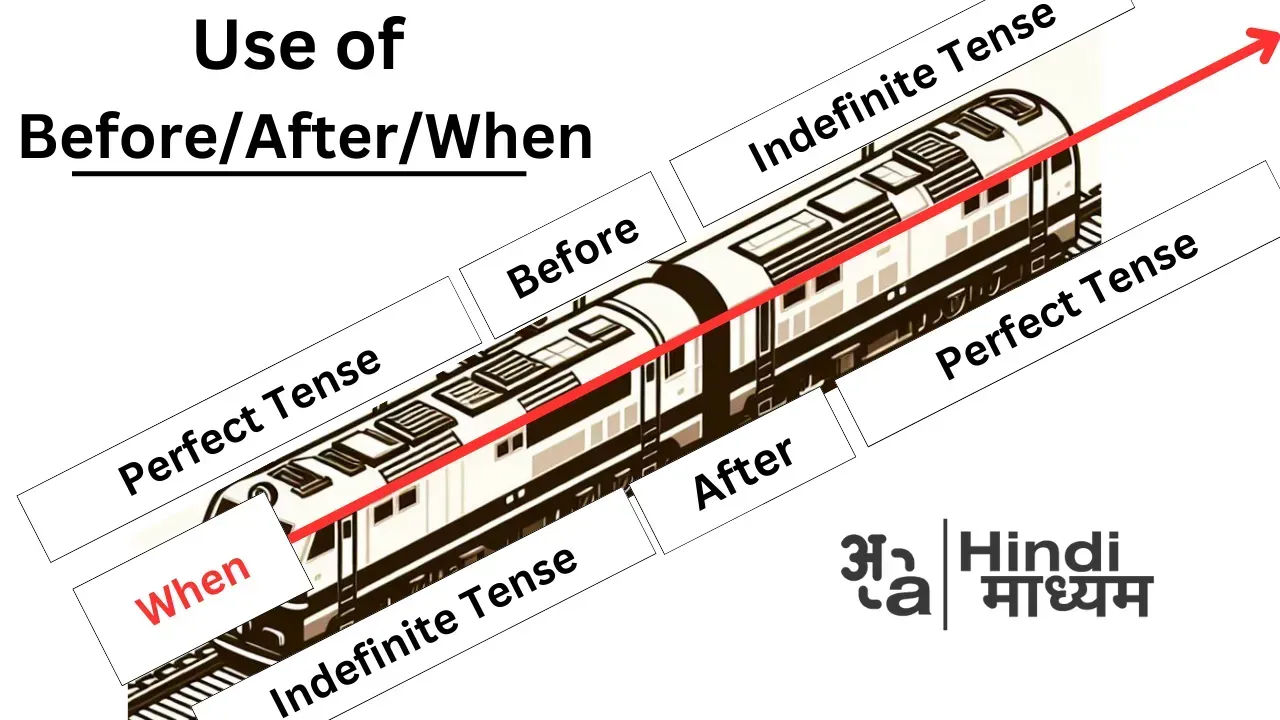 Before, After और When का उपयोग करके Past Perfect Tense वाक्यों को जोड़ना।
विशेष उपयोग: Past Perfect Tense का अन्य अनुप्रयोग
Past Perfect Tense का उपयोग केवल दो घटनाओं के क्रम को दिखाने तक ही सीमित नहीं है। इसका प्रयोग अप्रत्यक्ष भाषण (Indirect Speech) में भी होता है। जब Simple Past Tense या Present Perfect Tense को Indirect Speech में बदला जाता है, तो वे Past Perfect Tense में बदल जाते हैं।
उदाहरण:
- Direct Speech: “I finished the book.”
- Indirect Speech: She said that she had finished the book.
उसने कहा कि वह किताब खत्म कर चुकी थी।
- Indirect Speech: She said that she had finished the book.
- Direct Speech: “He has gone to the market.”
- Indirect Speech: They told me that he had gone to the market.
उन्होंने मुझे बताया कि वह बाजार जा चुका था।
- Indirect Speech: They told me that he had gone to the market.
यह Tense उन इच्छाओं या स्थितियों को भी व्यक्त करने के लिए उपयोगी है जो भूतकाल में पूरी नहीं हो सकीं। इसे Third Conditional Sentences में प्रमुखता से उपयोग किया जाता है।
- If I had known about the problem, I would have helped you.
अगर मुझे समस्या के बारे में पता होता, तो मैं तुम्हारी मदद करता। (मदद नहीं हो सकी।)
Past Perfect Tense In Hindi Exercise: विस्तृत अभ्यास खंड (Detailed Practice Section)
चूँकि इस लेख का मुख्य उद्देश्य अभ्यास प्रदान करना है, यहाँ Past Perfect Tense के सभी रूपों को कवर करने वाले विस्तृत अभ्यास सेट दिए गए हैं। इन अभ्यासों को हल करने से पहले, Tense के नियमों को दोहरा लें।
Practice Set 1: Hindi से English अनुवाद (Translation: Before/After)
निम्नलिखित हिंदी वाक्यों का अनुवाद अंग्रेजी में करें। पहचानें कि कौन सा कार्य पहले हुआ है।
- घंटी बजने से पहले छात्र कक्षा में आ चुके थे।
- सूरज उगने के बाद किसान खेत पर पहुंचा।
- मेरे घर छोड़ने से पहले मेरी माँ ने खाना बना लिया था।
- डॉक्टर के ऑपरेशन करने के बाद रोगी की मृत्यु हुई।
- जब मैंने उसे देखा, वह पहले ही स्टेशन छोड़ चुकी थी।
- परीक्षा शुरू होने से पहले हम अपना रिवीजन पूरा कर चुके थे।
- चोर के भाग जाने के बाद पुलिस घटनास्थल पर पहुँची।
- बरसात रुकने से पहले मैदान गीला हो चुका था।
- शिक्षक के आने से पहले बच्चे शोर नहीं मचा चुके थे।
- क्या तुम मेरे समझाने से पहले सब कुछ समझ चुके थे?
Practice Set 2: नकारात्मक और प्रश्नवाचक वाक्य रूपांतरण (Negative and Interrogative Transformation)
निम्नलिखित सकारात्मक वाक्यों को पहले नकारात्मक (Negative) और फिर Wh-शब्द प्रश्नवाचक (Interrogative) में बदलें।
Original Sentence (A): The company had launched the product before the patent expired.
- Negative: The company had not launched the product before the patent expired.
- Interrogative (Wh-Type): Why had the company launched the product before the patent expired?
Original Sentence (B): We went to the cinema after we had finished all the chores.
- Negative: We did not go to the cinema after we had finished all the chores.
- Interrogative (Wh-Type): Where did we go after we had finished all the chores?
Original Sentence (C): The manager had already left when I reached the office.
- Negative: The manager had not already left when I reached the office.
- Interrogative (Wh-Type): When had the manager left the office?
Practice Set 3: क्रिया के सही रूप को भरना (Fill in the Correct Verb Form)
कोष्ठक में दी गई क्रियाओं का उपयोग करके वाक्यों को Past Perfect Tense या Simple Past Tense से पूरा करें।
- She ______ (lock) the door before she ______ (leave) the house.
- When the firemen ______ (arrive), the building already ______ (burn) down.
- I ______ (call) him after the meeting ______ (finish).
- My parents ______ (thank) me for the gift that I ______ (buy).
- He ______ (not/see) me before I ______ (introduce) myself.
- ______ the audience ______ (go) before the concert ______ (start)?
- We ______ (start) walking after the sun ______ (rise).
- The team ______ (win) the match because they ______ (train) hard.
- Before the news ______ (publish), the media ______ (gather) all the facts.
- My brother ______ (be) sick for a week before the doctor ______ (diagnose) him.
Practice Set 4: अनुवाद अभ्यास (Advanced Hindi to English Translation)
- क्या पिताजी के डांटने से पहले बच्चे अपना कमरा साफ़ कर चुके थे?
- वह क्यों नहीं समझ पाया जब मैंने उसे समस्या समझा दी थी?
- पूरी दुनिया में फैलने से पहले यह वायरस केवल चीन तक सीमित था।
- मैंने वह शहर कभी नहीं देखा था जब तक मैं पिछले साल वहाँ नहीं गया।
- जब वह मीटिंग में आया, तब तक महत्वपूर्ण निर्णय लिए जा चुके थे।
- तुम्हारे मना करने के बाद भी वे क्यों चले गए?
- क्या बारिश रुकने के बाद तुमने कपड़े धोए?
- ट्रेन छूट जाने से पहले तुम स्टेशन क्यों नहीं पहुँचे थे?
- वे दो घंटे से फिल्म नहीं देख रहे थे, क्योंकि बिजली जा चुकी थी।
- मैनेजर के इस्तीफा देने से पहले उसने दो साल तक कंपनी के लिए काम किया था।
अभ्यास सेट के उत्तर और स्पष्टीकरण (Answer Key and Explanation)
सही व्याकरण और Tense के नियमों को लागू करते हुए, अपने उत्तरों की जाँच करें।
Practice Set 1 Answers (Hindi to English)
- The students had come into the class before the bell rang.
- The farmer reached the field after the sun had risen.
- My mother had cooked food before I left the house.
- The patient died after the doctor had performed the operation.
- When I saw her, she had already left the station.
- We had completed our revision before the exam started.
- The police reached the scene after the thief had fled.
- The ground had become wet before the rain stopped.
- The children had not made noise before the teacher came.
- Had you understood everything before I explained it?
Practice Set 3 Answers (Verb Forms)
- She had locked the door before she left the house.
- When the firemen arrived, the building already had burned down.
- I called him after the meeting had finished.
- My parents thanked me for the gift that I had bought.
- He had not seen me before I introduced myself.
- Had the audience gone before the concert started?
- We started walking after the sun had risen.
- The team won the match because they had trained hard.
- Before the news was published, the media had gathered all the facts.
- My brother had been sick for a week before the doctor diagnosed him.
Practice Set 4 Answers (Advanced Translation)
- Had the children cleaned their room before the father scolded them?
- Why couldn’t he understand when I had explained the problem to him?
- This virus had been limited only to China before it spread worldwide.
- I had never seen that city until I went there last year.
- When he came to the meeting, important decisions had been taken.
- Why did they go even after you had refused?
- Did you wash the clothes after the rain had stopped?
- Why had you not reached the station before the train left?
- They had not been watching the movie for two hours because the electricity had gone.
- He had worked for the company for two years before the manager resigned.
हम उम्मीद करते हैं कि यह विस्तृत past perfect tense in hindi exercise मार्गदर्शिका आपके संदेहों को दूर करने में सफल रही होगी। Past Perfect Tense में महारत हासिल करने के लिए, निरंतर अभ्यास और क्रिया के तीसरे रूपों को याद रखना महत्वपूर्ण है। याद रखें, अंग्रेजी सीखने की यात्रा में क्रमबद्धता और स्पष्टता सफलता की कुंजी है। यदि आप Past Perfect Tense की संरचनाओं को समझते हैं, तो आप अंग्रेजी बोलने और लिखने में समय के क्रम को स्पष्ट रूप से दर्शा पाएंगे।
Last Updated on 24/11/2025 by Emma Collins

Hello there! I’m Emma Collins, your English instructor at Skilled English. Learning a new language doesn’t have to be stressful or confusing — and I’m here to prove it. With over 6 years of experience teaching English to beginners, my goal is to help you feel confident in speaking, writing, and understanding English step by step. Read more


